 Alex Zah
Short anxiety tools can be useful when you need a reset before a meeting, after a sharp email, before sleep, or in the middle of a spiral. They are not cures, and they do not work the same way in every nervous system state.
The better question is not “Which tool is strongest?” It is “Which tool fits this state right now?”
This ranking weighs three things: how quickly the tool can be started, how well it fits common stress states, and whether the claim can be grounded in credible evidence without pretending that one exercise treats anxiety disorders.
How this ranking works
This is a practical self-regulation ranking, not a medical ranking. A technique can be evidence-informed and still be the wrong first move for a particular person at a particular moment.
If anxiety feels unsafe, includes chest pain, fainting, thoughts of self-harm, or a sense that you may hurt yourself or someone else, skip self-guided tools and seek urgent support. These practices are for ordinary moments of stress, activation, overload, or emotional intensity.
1. A 30-second state check
What: Ask three quick questions: Is my body sped up, flat, or mixed? Is my breath high and tight, shallow and frozen, or relatively steady? Do I need downshifting, orientation, or gentle activation?

Why it ranks first: it prevents the common mistake of throwing a generic calming tool at every state. A breathing practice can help one person settle and make another person feel more trapped. The state check makes the rest of the seven minutes smarter.
Best for: nearly every moment, because it takes less than a minute and improves the odds that the next tool fits.
2. Exhale-led breathing or the physiological sigh
What: Use a longer exhale than inhale, or try a gentle version of the physiological sigh: one inhale, a small second inhale if it feels natural, then a slow exhale. Repeat for one to two minutes.
Why it ranks high: structured breathing has credible evidence for affecting stress physiology, and a 2023 study found cyclic sighing was associated with improved mood and reduced resting respiratory rate over a month. That does not mean two minutes is a guaranteed fix; it means breath is a reasonable first option for wired activation.
Best for: a tight chest, rushing thoughts, pre-event nerves, or the feeling that your system is too revved up to think clearly.
Use carefully: if breath focus makes you feel more anxious, switch to orientation or movement.
3. Sensory orientation
What: Look around slowly and name what is actually here: five things you see, three sounds, two physical contact points, and one color or shape that feels neutral.

Why it ranks high: it moves attention from mental threat content into present-time sensory information. It is simple, quiet, and works when breathwork feels too internal.
Best for: spiraling, fogginess, feeling unreal, post-conflict activation, or moments when your mind keeps replaying a scene.
4. Affect labeling
What: Put a plain label on the state: “anxious,” “activated,” “embarrassed,” “angry,” “uncertain,” or “overloaded.” Keep it simple and non-dramatic.
Why it ranks here: affect-labeling research suggests that putting feelings into words can change how emotional material is processed. In real life, the benefit is often practical: naming the state reduces the need to keep arguing with it.
Best for: social stress, meetings, tense conversations, and the first minute after a triggering message.
5. Gentle movement plus environment change
What: Stand up if you can, move to different light, stretch your neck or shoulders, take a slow walk across the room, and name one thing that changed.
Why it ranks here: movement changes the input stream. It gives the body new sensory information and can be especially useful when sitting still makes the loop louder.
Best for: flat, stuck, frozen, or foggy stress states where trying to relax harder makes you more collapsed.
6. Coherence breathing
What: Breathe in for about five seconds and out for about five seconds, smoothly, for five minutes. Keep it comfortable rather than perfect.
Why it ranks here: heart-rate-variability biofeedback and slow-paced breathing have a stronger evidence base than many quick calming hacks. It ranks below the faster tools only because it needs a cleaner five-minute window.
Best for: medium activation, pre-work priming, or a daily regulation practice when you are not at peak intensity.
7. Body scan
What: Move attention slowly from feet to head, noticing sensation without forcing it to change. Keep the tone curious, not corrective.
Why it ranks here: relaxation and body-based practices can support stress regulation, but a body scan is usually slower and more inward-facing than the tools above.
Best for: low-grade stress, bedtime, or days when you are already safe enough to pay attention inward.
Three 7-minute sequences to try

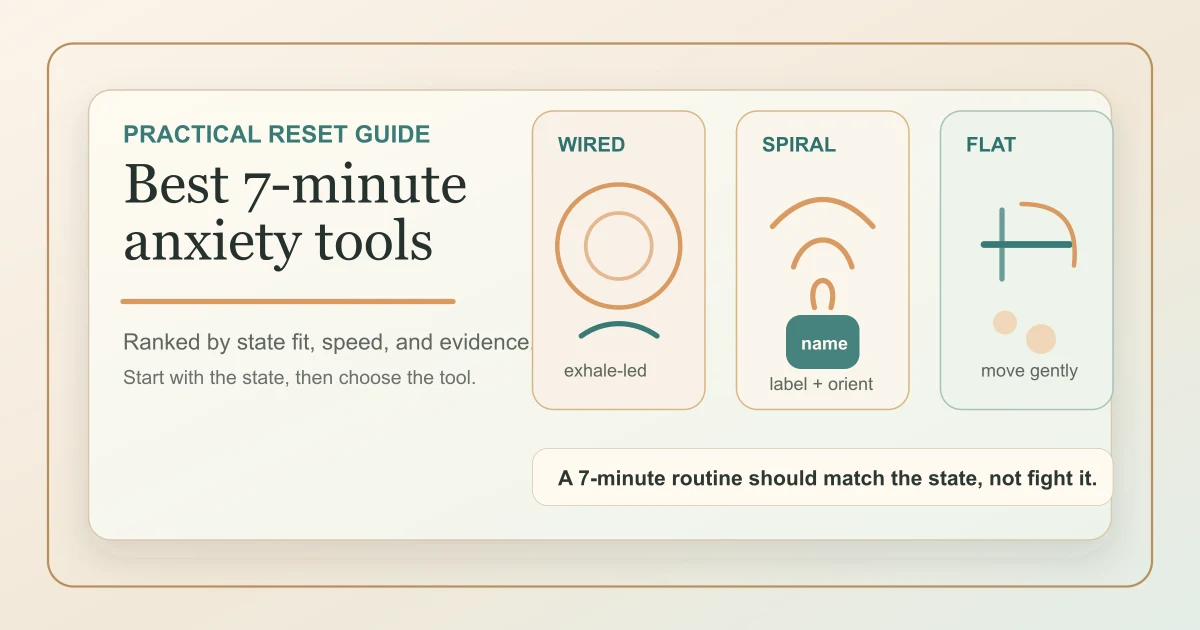
If you feel wired: 30-second state check, two minutes of exhale-led breathing, three minutes of coherence breathing, one minute of sensory orientation, and 30 seconds choosing the next small action.
If your mind is spiraling: 30 seconds naming the emotion, two minutes orienting to the room, two minutes of slower exhales, one minute writing or saying the actual next step, and 90 seconds doing nothing extra.
If you feel flat or disconnected: two minutes of sensory orientation, two minutes of gentle movement, one minute speaking a simple label out loud, and two minutes choosing one low-friction action.
Important: if a tool makes the state worse, that is useful information. Stop, orient outward, and choose a gentler option. Self-regulation is not about forcing calm; it is about finding the smallest move your system can actually use.
How NerveWindow uses this idea
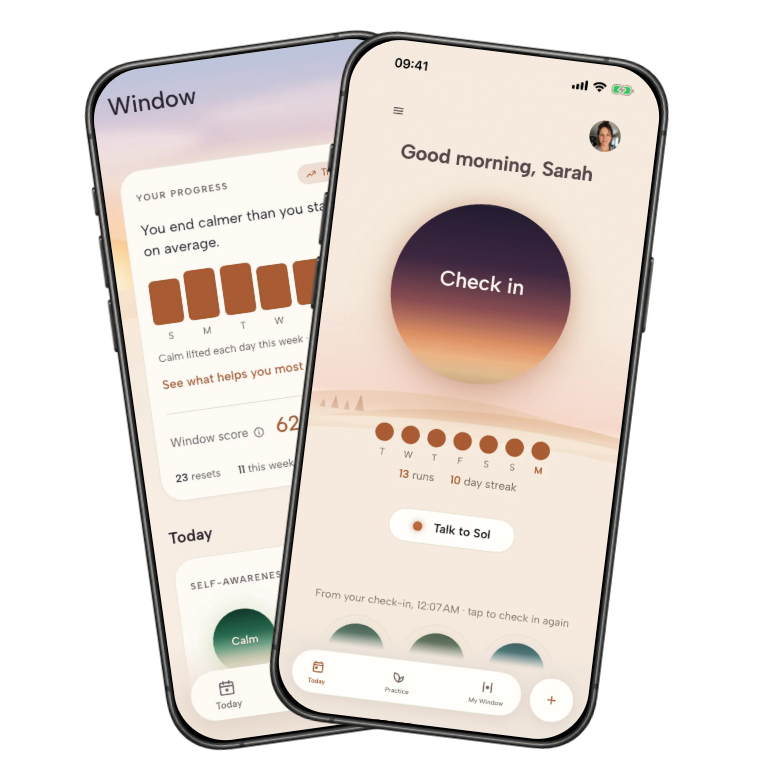
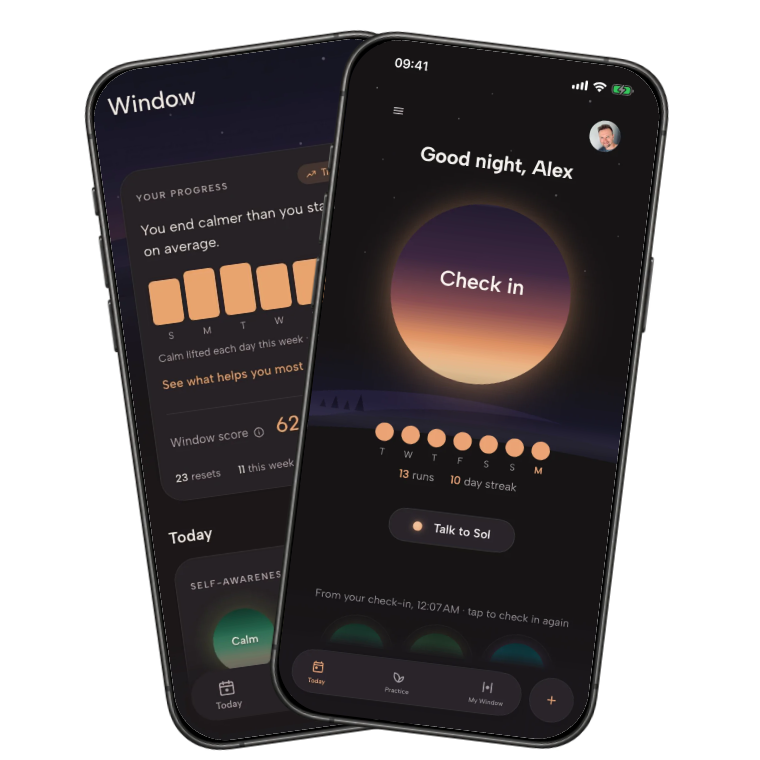
NerveWindow is built around the same state-matching principle. Instead of asking you to diagnose yourself or remember a technique list, it asks a short set of questions and guides you through a seven-minute routine matched to the pattern you report.
It is not therapy, medical care, or crisis support. It is a self-guided tool for everyday moments when you want a structured next step. See how it works.
FAQ
Can a seven-minute exercise fix anxiety?
A seven-minute exercise can sometimes interrupt a state, lower intensity, or help you choose the next step. It is not a cure, a diagnosis tool, or a substitute for therapy, medical care, or crisis support.
What if breathing makes me more anxious?
Use orientation or gentle movement first. Some people feel worse when they start with slow breathing while they are flat, disconnected, or very activated. Matching the tool to the state matters.
Which tool is best before a meeting or hard conversation?
For mild to moderate activation, try a short state check, exhale-led breathing, and one minute of sensory orientation. If you feel foggy or shut down, start with gentle movement and orientation instead.
Should I use these tools instead of therapy?
No. These are self-guided regulation tools for ordinary moments of stress or activation. Therapy, medical care, and crisis support are still important when symptoms are intense, persistent, dangerous, or connected to trauma or health concerns.
Short takeaway
The best fast anxiety tool is the one that fits the state. Start by checking whether you are wired, spiraling, or flat. Then choose a small sequence: breath for high activation, label plus orientation for spiraling, movement plus orientation for shutdown-flavored stress.
NerveWindow — state-matched 7-minute routines. $27 lifetime. 30-day refund.