 Alex Zah
A breakup can leave you checking your phone or replaying a conversation. You may also be deciding whether to send another message.
Feature count matters less than a safe next action. This guide focuses on ordinary breakup stress.
It cannot remove grief or decide whether a relationship should restart. Those questions need more than an app comparison.
If the relationship involved threats, stalking, violence, or control, put safety first and use trusted local support.
If you feel unsafe or may hurt yourself or someone else, contact local emergency or crisis support now.
How these apps were compared
I compared each app's job, speed, access, and stated limits. I did not score health outcomes or treat store ratings as proof.
Official product pages were checked on October 9, 2026. NerveWindow is included, and I built it.
The full process covers ownership, price checks, and corrections. Read How We Review Apps.
Quick comparison
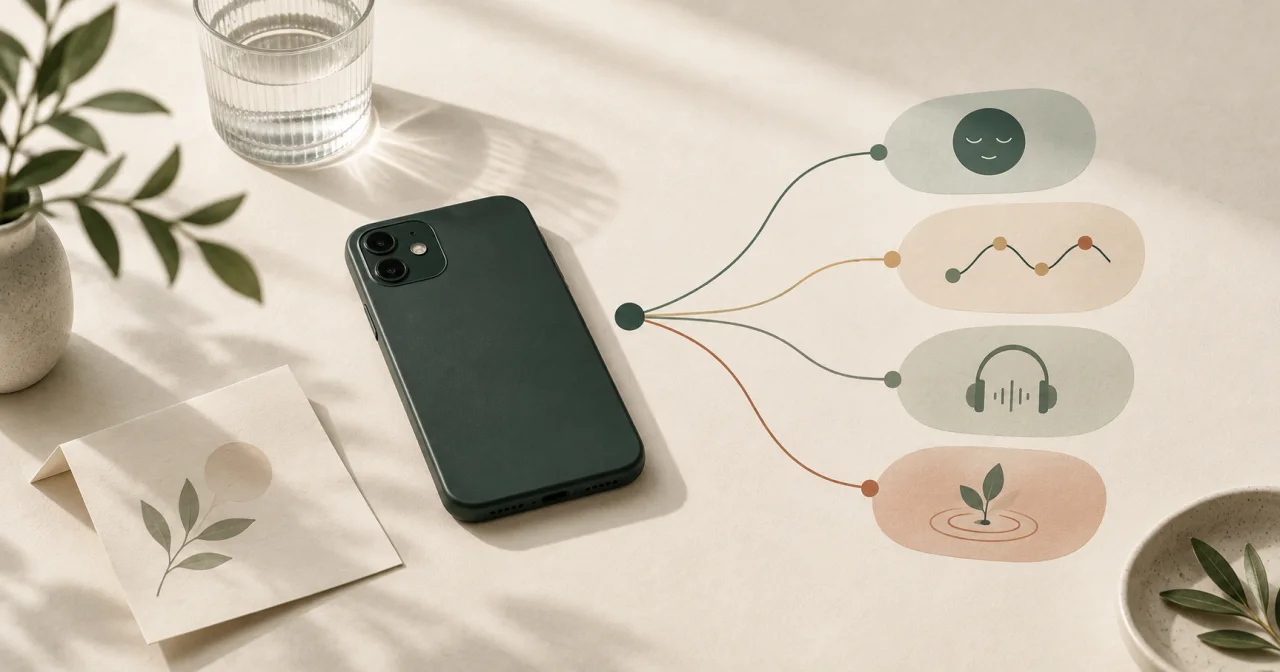
| App | Best fit | Access | Main limit |
|---|---|---|---|
| How We Feel | Naming a feeling and choosing from simple strategies | Free, supported by donations; iOS and Android | It asks you to reflect and choose, which may feel like too much in a sharp moment. |
| Daylio | Fast mood and activity logging over days or weeks | Free unlimited version; optional paid upgrade; iOS and Android | It records the moment but does not guide you through one specific action. |
| Calm | A large choice of guided audio, music, and sleep content | Limited free access and paid plans; current cost varies by offer and region | A large library can create more choosing when you already feel scattered. |
| NerveWindow | One short practice matched to how you feel now | $27 Basic or $67 Pro, paid once; browser access | It is not a breakup diary, contact tracker, or relationship advice app. |

Access and prices checked October 9, 2026. Offers can change; confirm the final amount before you pay.
1. How We Feel: best for naming the moment
What it does: How We Feel starts with a check-in. You choose feeling words, add context, and can use a simple strategy.
Best fit: every feeling has collapsed into bad, angry, or sad. You need language before deciding what to do.
Limit: it helps you review patterns, but naming is not a guided action. Pick something narrower when the feeling is already clear.
Access checked October 9, 2026: free on iOS and Android. The nonprofit says donations support the app.
2. Daylio: best for seeing repeated patterns
What it does: Daylio logs mood and activities through icons and short notes. Later, you can compare what appears around certain moods.
Best fit: you want a small daily record. It can show whether messages, lost sleep, or skipped meals appear before harder evenings.
Limit: a pattern becomes useful over time. Daylio does not guide the next five minutes.
Access checked October 9, 2026: the unlimited free version remains available. Premium adds deeper statistics and more custom options.
3. Calm: best for a familiar guided voice
What it does: Calm offers guided meditations, music, and sleep content. Its large library can also support a bedtime routine.
Best fit: you already know which voice or track helps. Familiar audio can remove the need to write or choose again.
Limit: the variety creates more browsing. Pick something narrower if a large library leads to ten minutes of searching.
Access checked October 9, 2026: monthly and annual paid plans are available. Offers and regional prices vary, so no fixed price is printed here.
A five-minute plan before you open any app
- Put the conversation out of view. Turn the phone face down or close the message thread for five minutes.
- Check the room. Name three objects and notice the chair, floor, or bed supporting you.
- Choose the job. Do you need to name the feeling, record a pattern, hear a voice, or follow one action?
- Open one app. Do not compare four apps while you are upset. Choose one job and stop browsing.
- Delay contact decisions. Write the message in notes if you need to. Decide about sending after the short pause.

If the moment follows conflict, use the guide on what to do after an argument. If thoughts repeat, compare apps for overthinking.
Who should pick another app
Pick a breakup app for a no-contact calendar or shared-item checklist. Use notes for private writing, or a sleep app when audio already helps at night.
Apps cannot handle threats, stalking, legal questions, or urgent money and housing problems. Use trusted people and the right local services for practical help.
How NerveWindow fits
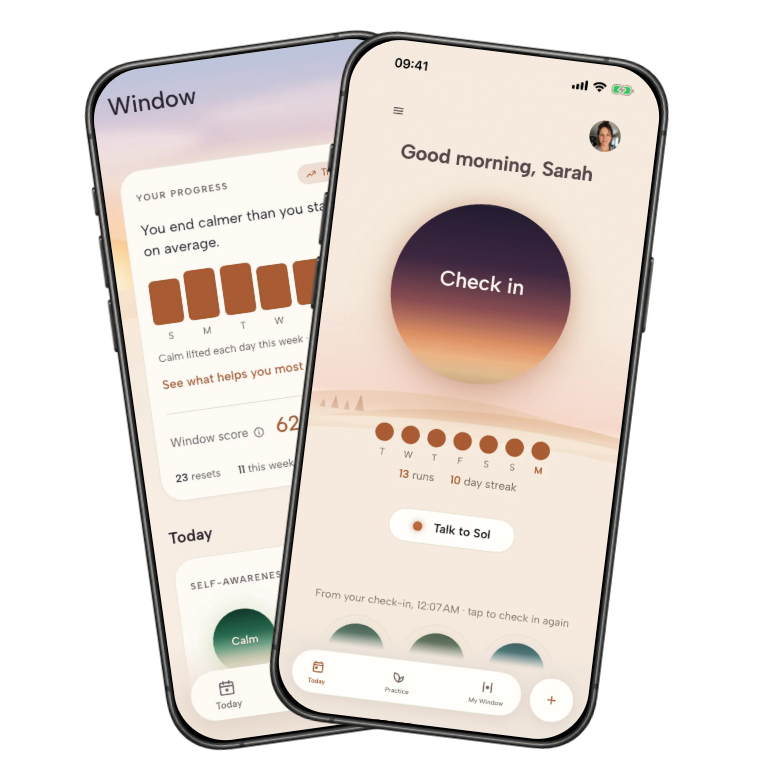
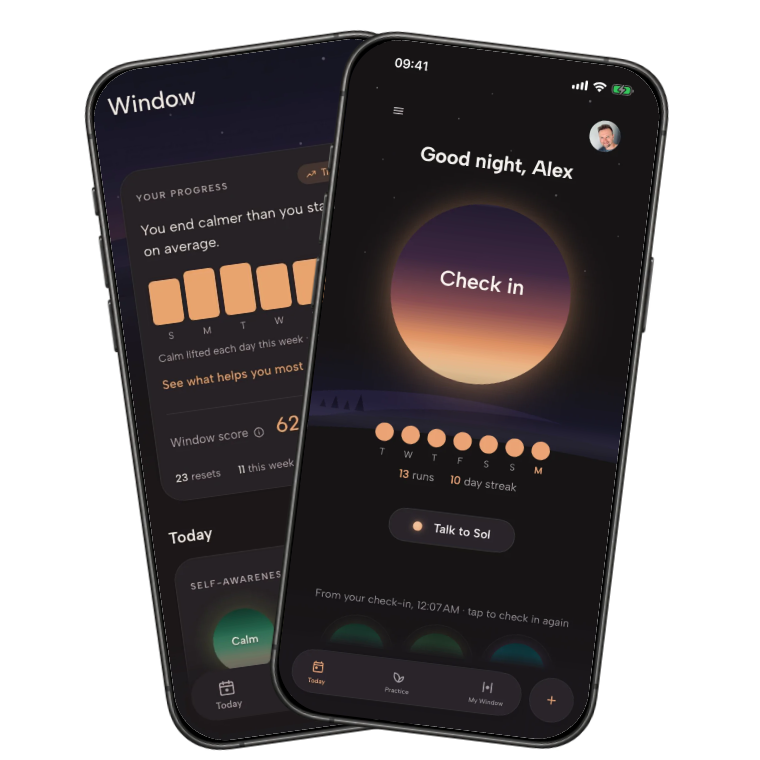
NerveWindow asks how you feel now and gives you one short practice. It suits moments when you do not want a large library.
Try the free state check-in, read the regulation guide, or check current access. It is not relationship advice or crisis support.
What to do after the first app session
Do not demand a final answer from a calmer minute. Choose one task: drink water, eat, shower, change rooms, or tell someone today is hard.

Decide when you will check the phone again, after the strongest minute has passed. For more options, see the emotional regulation apps comparison.
FAQ
What is the best app to help me get over a breakup?
No single app covers every part of a breakup. How We Feel names feelings, Daylio tracks patterns, Calm guides audio, and NerveWindow offers one matched action.
What is the 3-3-3 rule for breakups?
The name covers several ideas, so there is no standard breakup rule. Try naming three sights, three sounds, and three points of contact, then stop if unhelpful.
What is the 72-hour rule after a breakup?
The 72-hour rule is an informal pause before contact or big decisions, not a proven deadline. Plan the next hour, then review contact choices later.
Is it normal to cry often after a breakup?
Crying can be part of loss, and people vary. An app may support one step, but use local emergency or crisis support if anyone may be harmed.