 Alex Zah
An app helps before bed when it removes a decision. It can also keep you awake while you compare voices, tracks, and plans.
The best choice is easy to open, use, and put down. This everyday routine does not promise sleep or replace help for persistent concerns.
How these apps were compared
I compared each bedtime job, level of choice, access model, and stated limit. I did not test sleep outcomes or rank store ratings.
Official product and support pages were checked on October 9, 2026. NerveWindow is included, and I built it.
The full process covers ownership, price checks, and corrections. Read How We Review Apps.
Quick comparison
| App | Best fit | Access | Main limit |
|---|---|---|---|
| Calm | Sleep Stories, music, and a broad audio library | Limited free access and paid plans; cost varies by offer and region | The large library may add too much choice at bedtime. |
| Headspace | A structured guided wind-down and sleep audio | Some free access; monthly or annual paid plans | The course and library model may be more than you need for one short night routine. |
| Insight Timer | A very large free library and meditation timer | Large free tier; optional MemberPlus is about $60 yearly in the US | Quality and style vary across a very large teacher library. |
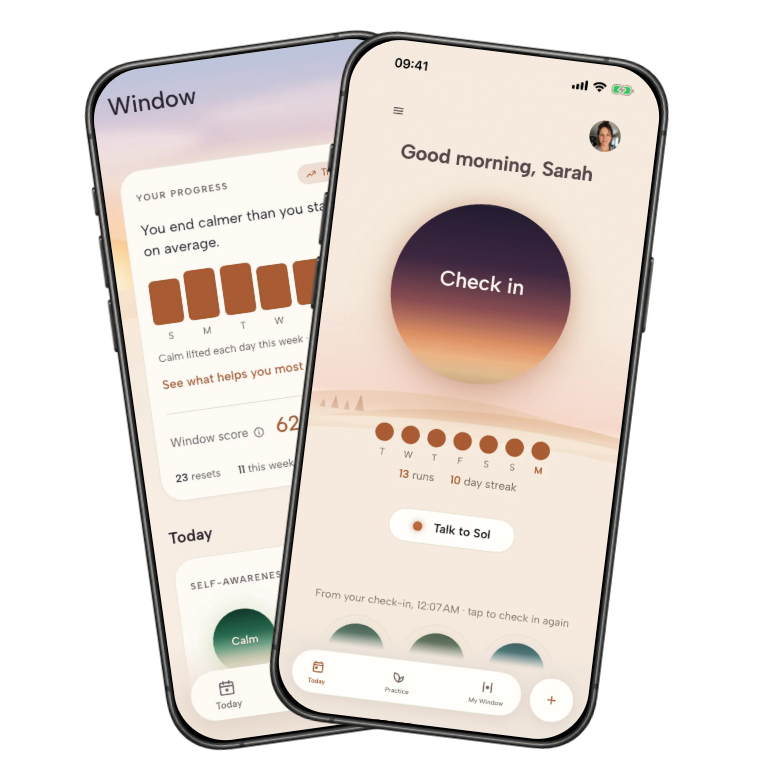
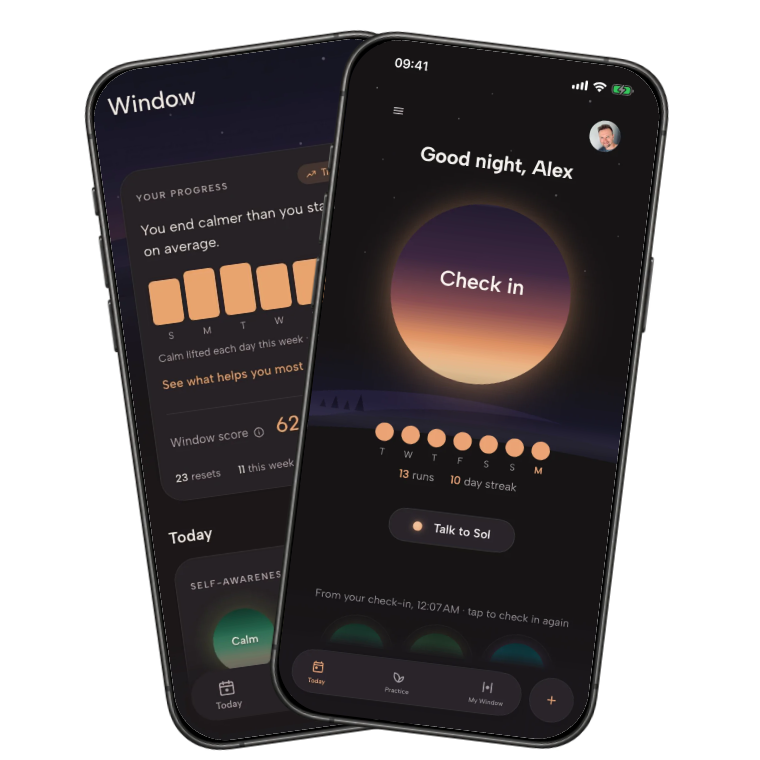
| NerveWindow | One short practice based on how you feel before bed | $27 Basic or $67 Pro, paid once; browser access | It does not offer all-night audio or a large sleep library. |

Access and prices checked October 9, 2026. Offers can change; confirm the final amount before you pay.
1. Calm: best for a polished sleep library
What it does: Calm offers Sleep Stories, music, soundscapes, and guided sessions. Its strength is production quality and choice.
Best fit: you want polished bedtime audio. Reusing a favorite narrator or track can remove another decision.
Limit: browsing can become part of the problem. Paid plans renew unless cancelled, and trials can lead into an annual plan.
Access checked October 9, 2026: limited free access and paid plans. Prices differ by country, website, app store, and current offer.
2. Headspace: best for a repeatable guided routine
What it does: Headspace combines courses, sleepcasts, music, movement, and daily content. Its guided style can continue across several days.
Best fit: you like a structured course and one consistent teaching style. A clear voice matters more than a simple checklist.
Limit: it is more than a free timer or one short action. Check the renewal period and cancellation route before a trial.
Access checked October 9, 2026: monthly and annual plans are available. The public page showed no stable amount, so no price is printed here.
3. Insight Timer: best for free variety
What it does: Insight Timer offers guided practices, sleep tracks, music, and a timer. Its large free library includes many teachers.
Best fit: you want free choice and already know what to search for. You can try several teachers without paying.
Limit: a huge library can feel uneven or tiring to browse. It does not narrow the choice for you.
Access checked October 9, 2026: the free library is broad. Optional MemberPlus is about $60 yearly in the US, with regional variation.
Use a ten-minute screen-off rule
Decide the end before you start: one session, then the screen goes off. Disable autoplay, and save one or two tracks during daylight.

For unfinished thoughts, read what to do when your mind will not stop. For body-based options, see the sleep exercise guide.
A simple bedtime test for seven nights
- Choose one app and one track. Keep the choice the same for a week.
- Start at the same point in the routine. For example, after brushing your teeth and before getting into bed.
- Keep the session short. Ten minutes is enough to learn whether you will use it.
- Put the phone out of reach. Do not move from the app into messages or news.
- Review the routine in daylight. Change the app tomorrow, not at midnight.

This is a practical test, not a promise about sleep. Review whether the routine became easier to repeat and the phone easier to put away.
Who should pick another app
Use an audio player for a track you own, or a paper book when the phone keeps you engaged. If voice distracts you, try the gentle breathing timer.
Choose a tracking tool for detailed sleep measurement. If sleep problems are persistent, severe, or affect daytime safety, an app comparison is not enough.
How NerveWindow fits
NerveWindow asks whether you feel fast, foggy, or overloaded, then offers one short practice. It helps when too much content is the problem.
It does not provide all-night audio or promise sleep. Read the regulation guide or check current access.
The smallest useful choice
Choose Calm for stories, Headspace for routine, or Insight Timer for free variety. Choose the state-matched route for one action instead of a library.
Make the choice during daylight. At bedtime, the best app is the one that helps you stop using the phone.
FAQ
How can I calm my mind before going to sleep?
Reduce new input, put work away, and choose one familiar audio or short practice. If you remain awake, return to a quiet activity instead of browsing.
What are some good apps to help me fall asleep?
Calm and Headspace offer guided sleep libraries. Insight Timer offers free variety, while NerveWindow gives one short practice based on how you feel.
How does the Calm app work for sleep?
Calm offers Sleep Stories, music, sound, and guided sessions. Some access is free; full access is paid, and regional offers vary.
What is the 3-3-3 rule for sleep?
There is no standard sleep rule with that name. Notice three sights, three sounds, and three points of contact; keep your eyes open if needed.