 Alex Zah
Burnout often gets treated like a motivation problem: take a weekend, try a routine, get disciplined, push through. That advice misses the main issue. If demand stays high and recovery cannot catch up, the system may keep narrowing capacity no matter how sincere your intentions are.
The practical question is not only how do I feel better? It is what load is my system carrying, what recovery is missing, and what would make the next week more sustainable?
Exhaustion
Not just tiredness after effort, but a deeper sense that ordinary work, decisions, or contact require more energy than you can access.
Distance
Cynicism, numbness, irritability, detachment, or a feeling that the work no longer connects to meaning or care.
Reduced efficacy
Tasks take longer, quality drops, focus narrows, and self-trust weakens even when skill and intelligence are still present.
What a nervous-system lens adds
Burnout research usually focuses on work stress, exhaustion, cynicism, and efficacy. A nervous-system lens adds a simple operational layer: what is happening to activation, attention, recovery, and capacity right now?
Some burnout patterns feel wired and unable to stop. Some feel flat and shut down. Some alternate between urgent overwork and collapse. Each needs a different first move.
What to do before adding more self-improvement
- Cut avoidable load. Reduce optional inputs, meetings, notifications, open loops, and promises that are not truly load-bearing.
- Protect recovery windows. Recovery has to become scheduled and defended, not hoped for after everything else is done.
- Make the work smaller. In burnout, smaller work is not childish. It is a way to rebuild traction without spending the whole system.
- Change the demand where possible. If the job, business, or caregiving load is structurally too high, regulation alone cannot solve it.
- Use support early. Human support, medical support, therapy, coaching, operational help, or workplace change may be more relevant than another private technique.

Read next
State
Know the pattern
Burnout can look activated, flat, or both. These guides separate nearby nervous-system states.
Work
Adjust the system
For founders and high performers, burnout often lives in work design, identity pressure, and unsustainable open loops.
Practice
Rebuild capacity gently
Start with small regulation, not heroic resets. The goal is usable capacity, not instant transformation.
How NerveWindow fits
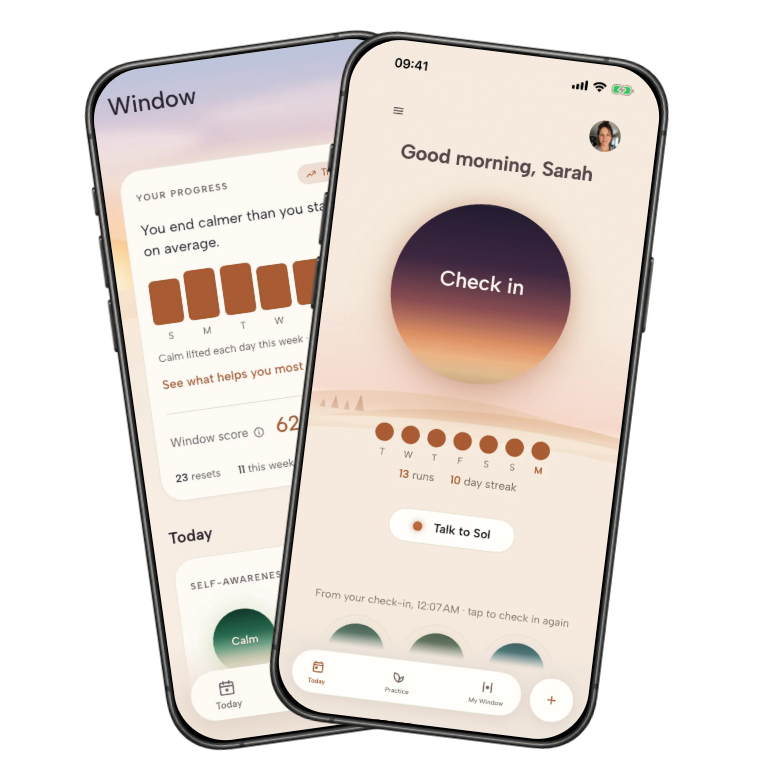
NerveWindow can help you notice whether you are wired, foggy, shut down, or still inside a workable range. Then it gives you a short matched routine instead of asking you to choose from a giant menu while overloaded.
The comparison of apps for burnout recovery separates that state-support job from workload planning, recovery tracking, small care habits, and rest content.
That is useful, but it is not enough by itself if the real issue is workload, lack of support, sleep debt, financial pressure, medical symptoms, unsafe conditions, or a workplace that keeps extracting more than you can recover.
Safety note: if burnout-like symptoms are severe, worsening, connected to depression, anxiety, trauma, medical issues, substance use, unsafe thoughts, or inability to function, use qualified professional support. If safety is at risk, contact emergency or crisis support now.
FAQ
Is burnout a nervous system problem?
It can be useful to look at burnout through the nervous system because stress, recovery, attention, sleep, activation, and shutdown all matter. But burnout is not something to self-diagnose from one article, and a nervous-system tool is not a replacement for care.
What is the first useful step?
Reduce load before adding more practices. Protect one recovery window, remove one unnecessary demand, make one task smaller, and get support for the actual source of pressure where possible.
Can NerveWindow fix burnout?
No. It can support state awareness and small matched regulation routines. Burnout often requires changes to workload, boundaries, recovery, support, work design, and sometimes clinical care.
How do I know if this is more than burnout?
If symptoms are intense, persistent, unsafe, medical, trauma-linked, or impairing daily function, do not treat it as a self-improvement problem. Get qualified support.
NerveWindow helps you check your state and choose a short matched routine. $27 lifetime. 30-day refund.