Alex Zah
Yes. Gentle, slow breathing can change breathing rate and help some people feel less stressed. Start with an easy breath and a slightly longer exhale; stop if the exercise makes you feel worse.
Pick a practice you can do comfortably today. A breathing session should leave you able to return to what matters, whether that is a conversation, a work task, or getting ready for bed.
What breathwork can actually change
Your heart rate changes as you breathe. Slow breathing can change that rhythm, and researchers measure those changes through heart rate variability, often shortened to HRV. Feeling better and seeing a different HRV reading are separate outcomes.
A review by Zaccaro and colleagues examined slow breathing in healthy people. It found changes in heart rate variability alongside reports of greater comfort and relaxation. The studies used different exercises, so their findings don't identify one perfect breathing count.
Think about the result you want before starting. “I want to read this message without rushing my reply” gives you something useful to check afterward. Chasing the lowest possible breathing rate gives you a number without answering that question.
For a careful distinction between everyday practices and medical stimulation, see which vagus nerve exercises may help and which claims are hype. A home breathing exercise doesn't measure or establish the health of a particular nerve.

The state-match rule
Notice whether you feel tense and hurried, relatively steady, or too tired to engage. Those ordinary descriptions help you choose a starting point. You don't need to decide which part of your nervous system is active.
If you are tense and willing to focus on breathing, try a gentle longer exhale. If watching your breath makes you uncomfortable, look around the room instead. Keep your eyes open and notice the surface supporting your feet.
When you feel foggy or far away, begin with something you can see or touch. You could move your hands or change your sitting position. Return to breathing only if it feels easier to follow afterward.
These are choices to test, not a way to determine what causes your symptoms. For daily self-regulation, start with the gentlest pattern that matches the state you are in. Stop if you feel dizzy, numb, unsafe, or worse.
Slow breathing and longer exhales
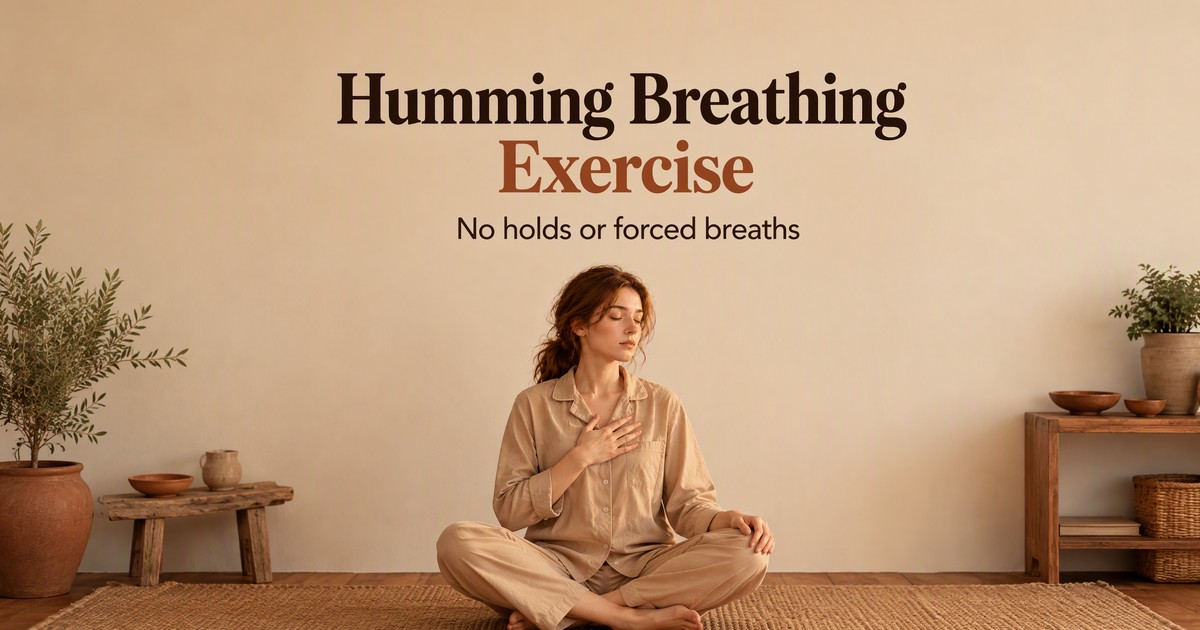
Sit somewhere supported and let a few ordinary breaths happen. Keep your shoulders comfortable. Take an easy breath through your nose if that feels natural, then let the air out without pushing to empty your lungs.
For a simple starting rhythm, breathe in for about 3 or 4 seconds and out for about 5 or 6. Try one to three minutes. Counting is optional; you can simply make the out-breath a little longer.
Keep each breath small enough to feel comfortable. If you need to gasp between breaths, stop following the count and return to ordinary breathing. A slower number is useful only when you can follow it without strain.
Let your attention stay partly in the room. You can notice the chair under you or keep your gaze on an ordinary object. Closing your eyes is optional, including when an audio recording suggests doing so.
Afterward, stop counting and check your next action. Can you read the message more easily? Can you speak without rushing? If nothing changes, you can finish there and try a different kind of support.
The 7-minute nervous system reset gives breathing a place within a short check-in. The separate physiological sigh guide explains the study behind an exhale-focused practice.
Resonance breathing and HRV practice
Equal breathing counts offer another starting point when you already feel reasonably comfortable. Five seconds in and five seconds out works out to six breaths per minute. You can shorten that rhythm if it feels demanding.
Resonance-frequency work usually includes finding a breathing pace that suits the person. Lehrer and Gevirtz describe how breathing, heart rhythm, and blood-pressure feedback interact. A single preset rhythm doesn't establish your individual resonance frequency.
HRV biofeedback also gives a person information about their heart rhythm during practice. A breathing animation without that feedback is a pacing aid. The difference matters when an app borrows results from biofeedback research.
The Goessl review found reduced self-reported stress after HRV biofeedback. Those sessions included feedback, so the result can't be credited to a few breaths paced by a phone animation.
When breathwork can backfire
You don't have to complete a recording that feels uncomfortable. Stop changing your breathing, stay in a supported position, and let your breathing return to its usual pace. Don't jump straight into another demanding exercise.
If counting itself keeps you tense, remove the count. If attention to breathing feels distressing, use the breath-free reset tool for an eyes-open option. The choice to stop is part of using a practice well.
Never practice intense breathwork, hyperventilation, or breath holds in water, while driving, while standing in a risky place, or anywhere losing consciousness would be dangerous.
If you are pregnant, have cardiovascular, respiratory, seizure, fainting, or serious mental-health concerns, get professional guidance before experimenting with intense breath practices.
A cautious read of the research
Balban and colleagues compared daily breathing exercises with mindfulness meditation over a month. Participants practiced for five minutes a day. The exhale-focused cyclic-sighing exercise produced greater improvement in positive mood and a greater reduction in breathing rate than meditation.
The study tested repeated practice, so its results don't establish lasting changes from a single sigh or outcomes for NerveWindow.
When you compare claims, look for the exercise used, how often people practiced, and what researchers measured. A change in breathing rate isn't the same as better sleep, and a change during practice isn't necessarily a lasting change. Our app review process explains what we check before making a comparison.
Keep your own observation modest too. Write “I felt less rushed after breathing” if that happened. You don't need to explain the change through cortisol, stored stress, or a nervous-system label to decide whether the practice helped.
How NerveWindow uses breathwork
See how NerveWindow works if you want help choosing a short practice. Its check-in leads to a suggested routine, and the exercise library includes Reset Breath, 5-and-5 Breath, and Wind-Down Breath.
The app also includes 5-4-3-2-1 Senses for noticing your surroundings. It gives you a concrete alternative on days when you don't want to focus on breathing. Follow the exercise's own instructions and safety guidance.
Choose a time when stopping is easy, such as before opening a work message. Keep the first attempt short. You can decide afterward whether guided pacing helps enough to use again. Before choosing guided audio, compare Breathwrk and its alternatives with Othership and its alternatives.
If you want to compare two practices, try them on separate ordinary occasions. Note what you chose and whether returning to your activity felt easier. Don't turn every difficult moment into a test you have to score.
A missed day doesn't require a longer session next time. Return to the familiar version when you want it. The practical aim is to have an instruction you can remember when choosing feels difficult.
Safety note
A comfortable breathing exercise may offer a useful pause. That doesn't make breathwork a fix for every problem or a replacement for medical care.
Breathwork is not therapy, medical care, or crisis support. If breath practice brings up panic, trauma memories, faintness, chest pain, self-harm thoughts, or any sense of danger, stop and use appropriate professional or emergency support.
You should be able to stop easily and feel more present, not more controlled or strained.
Fast breathing, forceful breathing, and breath holds can increase sensations that feel like anxiety or panic for some people. If you are already activated, choose gentle longer exhales instead.
If you feel flat, foggy, or far away, try opening your eyes, naming objects in the room, moving your hands or feet, or standing up before focusing on the breath.
FAQ
Can breathwork regulate the nervous system?
Some breathwork can help shift arousal, especially slow breathing, resonance breathing, and longer-exhale patterns. It is more accurate to say breathwork can influence state than to say it regulates everyone automatically.
Which breathing pattern is best when I feel wired?
When you feel wired, tight, or keyed up, a simple longer-exhale pattern is usually the safest first choice. Keep it gentle, avoid forcing a huge breath, and stop if you feel dizzy or worse.
Can breathwork make anxiety worse?
Yes. Fast breathing, forceful breathing, and long breath holds can increase arousal or create lightheadedness for some people. They are a poor fit when you are already activated and should not be practiced in water, while driving, or in any unsafe setting.
Is breathwork a substitute for therapy or medical care?
No. Breathwork is a self-regulation tool. It is not a substitute for therapy, medical care, crisis support, or professional help when symptoms are severe, persistent, unsafe, or connected to trauma or health concerns.
Short takeaway
Try a comfortable breathing pace in a safe place and check how you feel afterward. Keep a breath-free option available for days when focusing on breathing feels difficult.
$27 once. No subscription.