 Alex Zah
Daylio does one useful job particularly well: it reduces a daily mood entry to a few taps, while still leaving room for notes, photos, goals, and deeper review. It is a tracker and journal, not a system that decides which exercise you should use next.
Disclosure: NerveWindow publishes this comparison and is one of the alternatives. I built NerveWindow and have a commercial interest in it. I recommend another product whenever it fits the stated job better.
How this Daylio review was checked
Product facts checked August 19, 2026. I reviewed Daylio's official website, Help Center, US App Store listing, and Google Play listing, plus official documentation for each alternative. This is a documentation-based comparison, not a claim that I completed a long-term personal trial or clinical evaluation of every app.
I compared the main job, first useful outcome, return loop, amount of choice, and key limitation of each product. Features, availability, ratings, offers, and billing terms can change after the review date.

Choose by the job you need done
| Your main job | Best fit | Why it fits | Main limit |
|---|---|---|---|
| Log mood and activities quickly | Daylio | Fast entries, customizable moods and activities, charts, goals, and reminders support repeated tracking. | The log does not choose a practical exercise for the current moment. |
| Name a feeling more precisely | How We Feel | Its check-in is organized around emotion vocabulary, context, and pattern review. | Its center of gravity is awareness and emotion labeling. |
| Track symptoms and possible influences | Bearable | Symptoms, mood, sleep, medication, habits, and other factors can be reviewed together. | Detailed tracking asks for more setup and repeated input. |
| Use guided writing and reflection | Stoic | Prompts, journaling, quotes, and reflective routines are central to the experience. | Writing may be too demanding when attention is already limited. |
| Make habits feel playful | Finch | Goals and self-care activities connect to caring for a virtual companion. | The game loop may feel like extra activity when you want a neutral tool. |
| Choose one short practice for now | NerveWindow | A plain-language check-in routes the current signal to a brief fitting practice. | It is not a long-term mood diary or health-factor tracker. |

What the Daylio app actually does
Daylio describes itself as a journal that can be used without typing. A basic entry combines a mood with selected activities; notes and photos are optional. Over time, the app turns those entries into statistics, charts, calendars, streaks, and relationships between recorded moods and activities.

The product also supports custom moods and activities, goals, reminders, and exports. Daylio's official security FAQ says entries are stored locally on the device by default, while optional backups use the person's own cloud storage. Platform privacy disclosures and backup behavior should still be reviewed before recording sensitive information.
Where Daylio is strongest
Daylio is strongest when consistency matters more than depth on any single day. A mood and activity entry can be completed quickly, and the categories can be adapted to the person's actual routines rather than a fixed clinical vocabulary.
Choose Daylio when you want to answer questions such as: Which activities appear on better days? Has a mood shifted across several weeks? Which routines are easy to repeat? The statistics are descriptive. They can reveal a pattern worth noticing without proving that one activity caused the mood.
Where Daylio may be the wrong fit
A useful record is not always a useful next step. Daylio can show that a certain mood and activity often appear together, but it does not automatically turn a tense, foggy, restless, or shut-down moment into one matched exercise.
It may also be the wrong fit if detailed self-tracking makes you more preoccupied with scores, streaks, or perfect data. A lighter check-in, fewer categories, or no tracker at all can be the better choice. Current features and in-app offers vary by platform and can change.
How the main Daylio alternatives differ
How We Feel: best for precise emotion labeling
How We Feel is a nonprofit wellbeing journal built around choosing a more precise emotion word, adding context, reviewing patterns, and trying short strategies. It is the clearest choice here when emotion vocabulary and repeated check-ins are the main job.
Bearable: best for symptoms and possible influences
Bearable brings symptoms, mood, sleep, medication, habits, and other factors into one tracking system. It is a better fit when the central question is how several health and lifestyle variables move together, though the additional detail creates more setup and logging work.
Stoic: best for guided reflection
Stoic centers more of the experience on prompts, journaling, reflection, and philosophical framing. It is a better fit when writing helps you think, while Daylio remains more efficient for a quick categorical record.
Finch: best for playful daily motivation
Finch connects goals and wellness activities to caring for a virtual companion. Its advantage is emotional continuity and reward. It is a better fit when a gentle game loop makes daily habits easier to revisit.
NerveWindow: best for one state-matched next practice
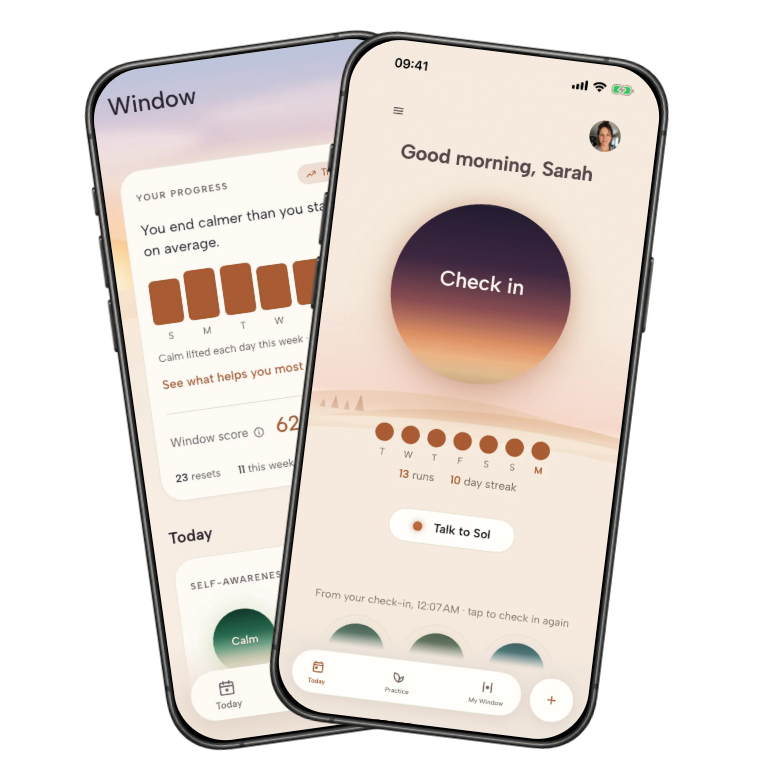
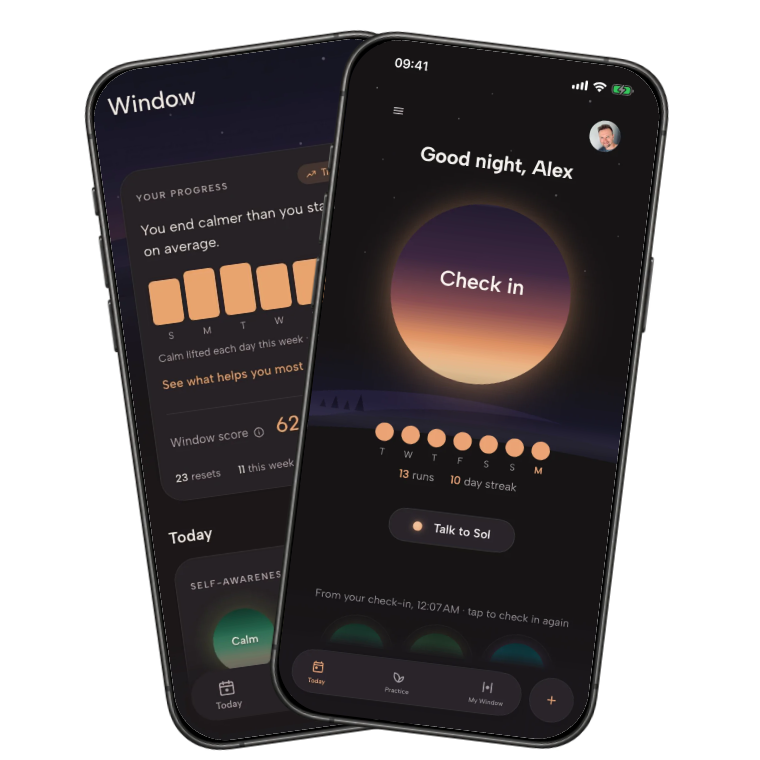
NerveWindow starts with a short check-in about what is happening now, then matches that signal to a brief practice using breathing, grounding, movement, body awareness, writing, or another route. It deliberately does a narrower job than Daylio.
See how NerveWindow chooses one short practice.
Daylio versus NerveWindow
The products can sit at different moments in the same routine. Daylio can help you record what happened and notice repeated associations. NerveWindow is designed for the point when you do not want to browse a large library or interpret a chart before choosing what to try next.

How to decide whether Daylio is worth trying
- Name the main job. Mood logging, emotion naming, health-factor tracking, guided writing, playful habits, and one immediate practice are different needs.
- Decide how much input you will repeat. A simple tracker only becomes useful when its entry routine is realistic enough to revisit.
- Check the privacy setup. Review local storage, optional backups, export options, and the current store privacy disclosure before adding sensitive notes.
- Judge the useful output. Decide whether you want a record, a chart, a writing prompt, a game loop, or one practical next action.
Common questions
What does the Daylio app do?
Daylio is a customizable mood and activity journal. A person can make a quick entry, optionally add notes or photos, review charts and calendars, and create goals around selected activities.
Is Daylio worth using?
It is worth considering when fast repeated logging, customization, and reviewing patterns are the main job. It is less direct when your immediate question is which practical exercise to use now.
What are the best alternatives to Daylio?
Choose How We Feel for detailed emotion naming, Bearable for symptoms and factors, Stoic for guided reflection, Finch for gamified habits, or NerveWindow for one short exercise matched to a current signal.
Is Daylio free?
Daylio can be downloaded and used without an upfront charge, with additional features offered through in-app purchases. Features and offers can vary by platform and change over time.
Is Daylio private?
Daylio says entries are stored locally on the device and optional backups use the person's private cloud storage. Review the current privacy policy and store disclosures for the platform you use.
Which is better for me: Daylio or NerveWindow?
Choose Daylio when you want to record moods and activities and inspect patterns over time. Choose NerveWindow when you want a short check-in that narrows the current moment to one practical exercise.
If your main friction is choosing what to do in the moment, NerveWindow starts with the current signal and narrows the next step.
Sources
- Daylio official product overview.
- Daylio official security and backup FAQ.
- Daylio official activity and mood statistics guide.
- Daylio US App Store listing.
- Daylio Google Play listing.
- How We Feel official product overview.
- Bearable official product overview.
- Stoic official product overview.
- Finch official new-user guide.
- NerveWindow official workflow.
Features, ratings, availability, access models, and billing terms can change after the review date.
Related next steps
The direct Bearable vs Daylio comparison shows when Daylio speed matters more than Bearable detail.