Alex Zah
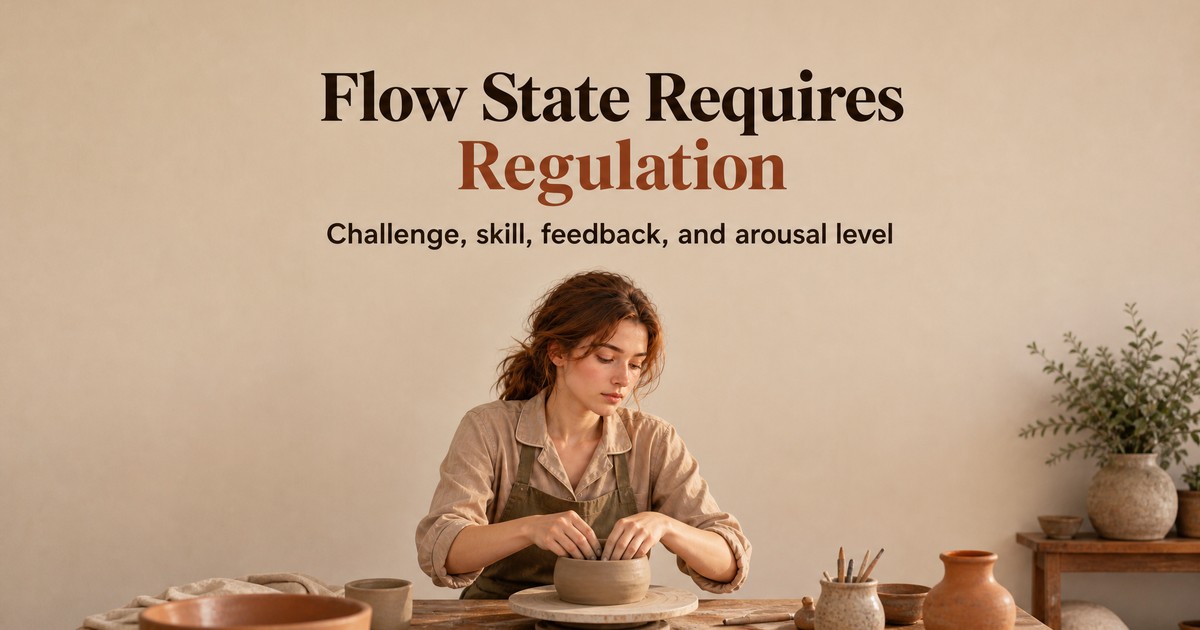
Flow state is often described as deep focus, but it is not produced by yelling at yourself to focus harder. Flow usually needs the right conditions: a clear task, feedback, enough challenge, enough skill, and a nervous system state that can stay engaged without tipping into panic or collapse.
Flow is not just intensity
Flow research often points to challenge-skill balance, clear goals, feedback, and absorption. That is different from raw pressure. Pressure may create a sprint, but it can also narrow attention and increase errors.
For many workers, the missing condition is not motivation. It is state fit.

Three flow blockers
How to prepare for flow
First, choose a task that is small enough to enter. Second, define the next visible result. Third, remove the most obvious interruptions. Fourth, match the body state: downshift if wired, add gentle activation if flat.
Then work in a container. Flow often appears after contact with the task, not before it.
How NerveWindow fits
NerveWindow helps you check whether your focus problem is actually a state problem. If your system is too activated or too flat, the app gives you a short reset before you try to force productivity.
Safety note
This is a work and self-regulation guide, not medical or mental-health care. Persistent attention, mood, sleep, or anxiety problems deserve appropriate support.
FAQ
Can nervous system regulation create flow?
It can support the conditions for flow, but it does not make flow automatic. Task design, skill, feedback, and interruption control also matter.
Why do I focus only under pressure?
Pressure increases activation. That may temporarily help, but relying on emergency energy can make calmer focus harder to access.
What if I feel too flat to start?
Use gentle activation: light, movement, a tiny first step, or a short timed entry instead of demanding deep focus immediately.
What if I feel too anxious to focus?
Downshift first: reduce input, lengthen the exhale, orient to the room, and make the task smaller.
Short takeaway
Flow is not brute force. It is the meeting point of task design and a workable nervous system state.
NerveWindow helps you get back into a workable state before you push focus. $27 lifetime.