Alex Zah

Somatic grounding is easy to misunderstand. It is not a trick for deleting emotion. It is a way to give attention a stable present-time target when the body is scanning, looping, or drifting away.
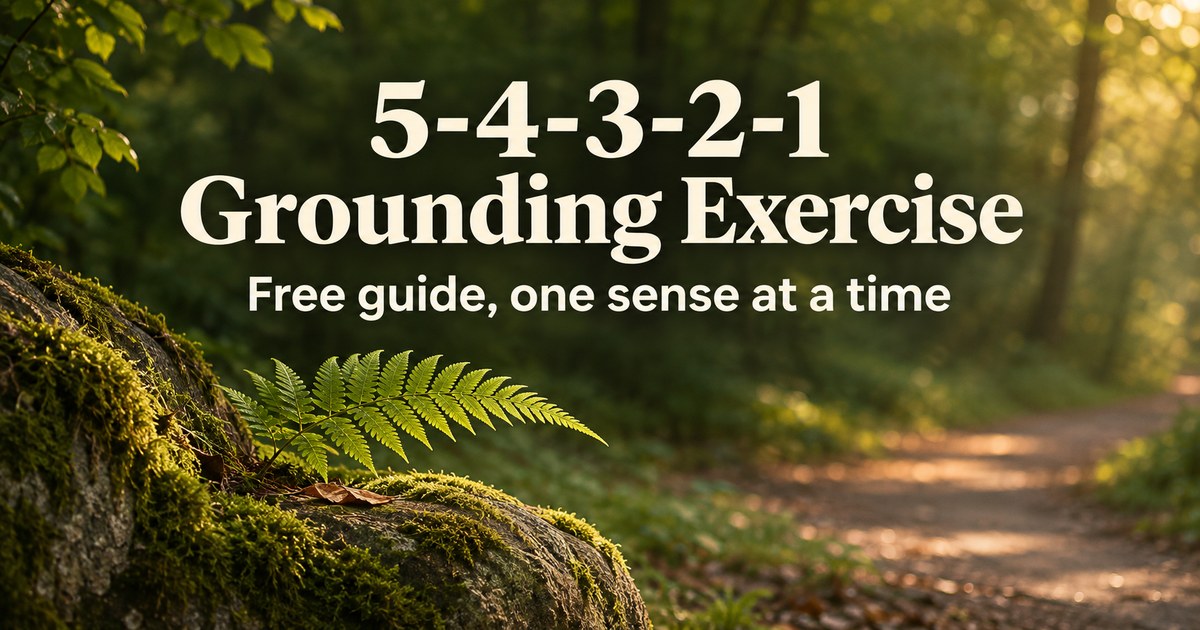
One of the simplest versions is sensory orientation: look, listen, feel contact, and name what is actually here.
How to do sensory orientation

Why this can be calming
Stress states narrow attention. Orientation opens the field again. Instead of thinking only about the problem, the system receives information that there is also a room, a floor, a wall, and time to choose.

That can be especially useful when closing your eyes or going inward makes sensations louder. Grounding can be done eyes open and in public.

When grounding feels too small
Grounding is small by design. It may not solve the problem. It may simply make the next step possible: drink water, pause a reply, walk outside, message someone, or stop scrolling.

If the main problem is too much incoming sound, light, screen activity, or conversation, begin by reducing load with the overstimulation guide.
If grounding does nothing, that does not mean you failed. The state may need movement, rest, food, social support, or professional care.
The breath-free reset tool offers two short eyes-open options when you want a little more structure without another breathing exercise.
How NerveWindow fits
NerveWindow uses sensory orientation as one option inside a bigger state map. The app helps you decide whether you need external grounding, movement, downshifting, or a different kind of reset.
The guide to grounding apps for adults compares dedicated sensory, orientation, venting, and state-matched tools by the job they perform. Our Rootd review looks at one of those options in more detail.
Safety note
If you feel dissociated, unsafe, panicky, medically unwell, or trauma-triggered, use qualified support. Grounding can support the moment, but it is not a substitute for care.
FAQ
Is sensory grounding the same as mindfulness?
They overlap, but sensory grounding is usually more external and practical. You can do it with eyes open while staying connected to the room.
Why name objects out loud?
Labeling objects can give attention a simple task and anchor it in present sensory information.
What if grounding does not calm me?
Use it as information. You may need movement, rest, lower stimulation, social support, or professional help rather than another grounding round.
Can I do this at work?
Yes. You can silently name objects, feel your feet, or notice the edges of your screen before replying.
Short takeaway
Grounding is a present-time anchor. Use the room, your senses, and one next action to create a little more choice.
NerveWindow turns grounding into a state-matched routine, not a random tip. $27 lifetime.