 Alex Zah

A new job brings unfamiliar people, systems, and expectations, even when the news is welcome. The mind may treat every unknown as a problem to solve before morning.
Most of those answers only appear after you arrive. Your useful job before day one is to remove avoidable decisions and make room to learn.
This page covers ordinary first-day nerves, not work outcomes or advice from your employer, union, accessibility contact, or another qualified source.
How this page was made
This page follows the day in order: the night before, the trip in, arrival, the first conversations, and the evening after.
Each step has one small job.
The aim is not perfect confidence.
It is enough steadiness to notice what is actually happening instead of rehearsing every possible mistake.
Official workplace and accessibility arrangements take priority when they apply.
The site's process covers writing, sourcing, ownership, and corrections. Read How We Review Apps.
The night before, remove only practical unknowns
Confirm the address, start time, contact name, travel route, dress expectations, and anything you were asked to bring.

Put those details in one note rather than several messages and tabs.
Choose clothes and pack food, water, identification, and a charger. Set one alarm and one backup if needed, then close the work material.
Do not prepare answers for every possible conversation.
Write a short introduction and one question about the first day; that is enough preparation for an unknown room.

Make the first morning ordinary
Keep breakfast, coffee, medication prescribed for you, and the route as familiar as possible.
The new job is already the new part; the rest of the morning can stay simple.
Leave with a modest buffer. Arriving slightly early gives you time to find the entrance without turning the commute into a test.
If your thoughts keep jumping ahead, use the exercise finder for one short option, then return to getting dressed or leaving home.
Use a three-step arrival plan
- Find the entrance or sign-in point.
- Contact the named person.
- Ask where to put your things and what happens first.
That is the whole arrival. You do not need to know the building, team, and role before the person responsible for welcoming you appears.

The before-a-meeting guide can help when the first day includes a formal introduction or team meeting.
Let learning look like learning
Write names, acronyms, logins, and open questions. Ask where information lives instead of trying to remember every detail after hearing it once.
Use simple phrases: “Could you show me where that is written?” or “Which part should I focus on first?” Clear questions usually help more than pretending the instruction was obvious.
When you make a small mistake, correct the next action. Day one is information, not a final evaluation of the role or of you.
Take quiet pauses without disappearing
Use natural breaks: washing your hands, filling water, or waiting for a screen to load.
Feel both feet, loosen your grip, and look at one fixed object.
A pause can last twenty seconds. It does not need to be visible, formal, or impressive.
If you have an agreed accessibility need, use the arrangement that was made. A general calming tip should not replace workplace support you need.
Do not grade the job at lunch
The first half-day contains missing context.
A quiet team may be busy; a confusing system may become clear; a warm welcome may still lead to a demanding week.
Write what happened without turning it into a forecast.
“I met four people and do not remember two names” is more useful than “I am already behind.”
For broader routine support, read the stress management app guide or the regulation guide.
Prepare one sentence for not knowing
New colleagues may ask how you are finding the role before you have enough information to answer.
Use a truthful holding sentence: “I am still learning how everything fits, and I appreciate the welcome.”
You can use the same approach when asked about a system, person, or project you have not met.
“I have not seen that yet.
Where should I start?” is useful and direct.
Not knowing on day one is part of the role, not evidence that you were the wrong choice.
Keep a list of open questions and bring the right one to the right person instead of carrying all of them as private tests.
At the end of the week, review which questions were answered simply by being there.
This is a useful reminder that many first-day fears need time and contact, not more preparation at home.
Who should pick another app
Use a calendar for start times, notes for names and instructions, and your employer's official systems for work tasks.
A calming app should not hold confidential work information or replace onboarding.
Use the relevant workplace or qualified support when the issue is safety, harassment, access, pay, or a severe and persistent change in daily functioning.
How NerveWindow fits
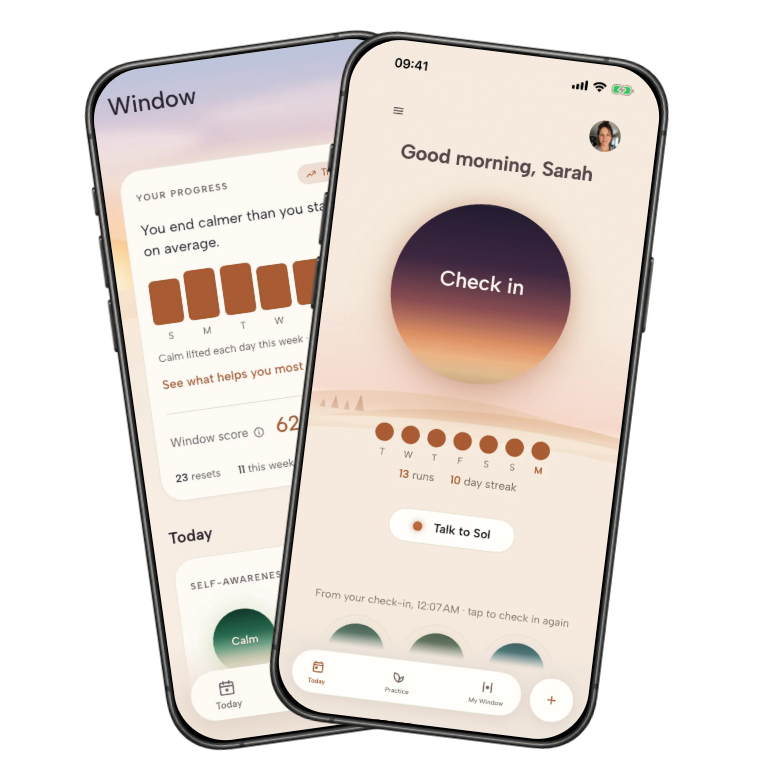
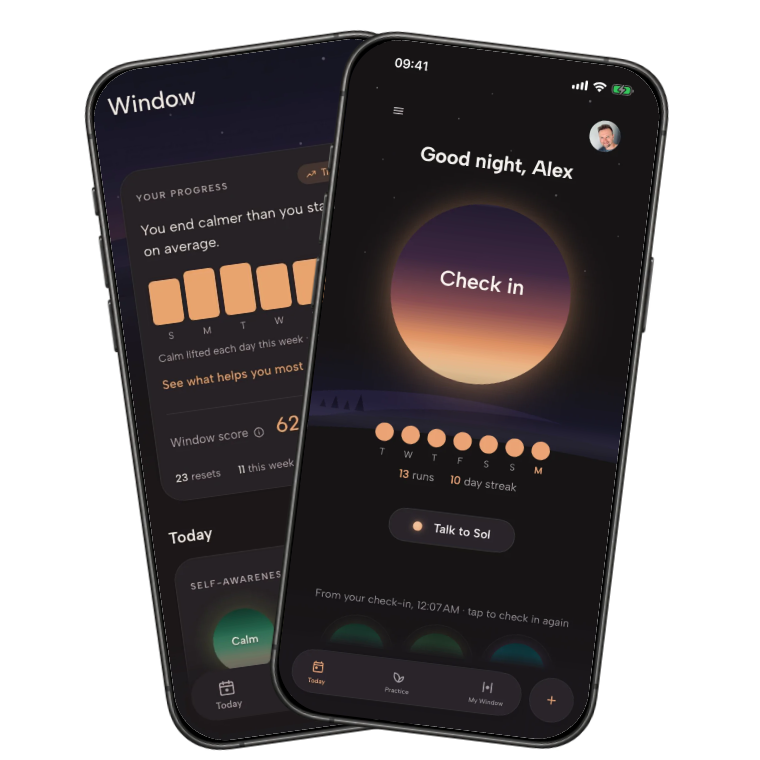
NerveWindow asks how you feel now and offers one short practice before the next part of the day.
It does not teach company systems or decide whether the job fits.
Try the free state check-in, read the after-work guide, or view current access.
End day one before reviewing it
When you get home, change clothes, eat, walk, or sit somewhere that is not your work setup.

Give the day a visible end before making notes.
Later, write three lines: what I learned, what I need to ask, and what I need tomorrow.
You are starting a job, not completing it in one day.
FAQ
How do I calm my nerves before starting a new job?
Prepare practical details the night before, keep the morning familiar, and reduce arrival to three steps. Use one brief grounding action rather than rehearsing the whole day.
Is it normal to feel nervous before a first day?
A first day contains many unknowns, so some nerves are understandable. You can prepare the route and arrival while allowing the role itself to become clearer over time.
What should I do the night before a new job?
Confirm the address, time, contact, route, clothes, food, identification, and charger. Write one introduction and one question, then stop preparing.
How early should I arrive for a new job?
Follow any instruction your employer gave. Otherwise, a modest buffer that lets you find the entrance without a long wait is usually more useful than arriving extremely early.