Alex Zah
Review verdict: NerveWindow is the better fit if you want a short check-in that chooses a practice based on your current state. Calm and Headspace are stronger if you want broad meditation, sleep, or mindfulness libraries. They can coexist; none should be treated as therapy, medical care, or crisis support.
The useful question is not “which app is best?” It is “which job am I hiring this app to do?” Calm and Headspace are mature content libraries. NerveWindow is intentionally narrower: check state, choose a short practice, repeat daily.
If you have tried meditation apps and liked the idea but did not always know what to pick when you were wired, flat, scattered, or overloaded, that is the gap NerveWindow is designed around.
The real difference
Calm and Headspace are broad mindfulness and meditation products. They include guided meditations, sleep support, breathing exercises, soundscapes, courses, and topic-based sessions. You usually choose a session from a library, or follow a daily recommendation.

NerveWindow is a state-matched nervous system practice tool. It starts with a brief check-in, then suggests a short routine based on the state you report. The emphasis is not more content; it is a smaller loop that helps you notice your state and choose a matching next practice.
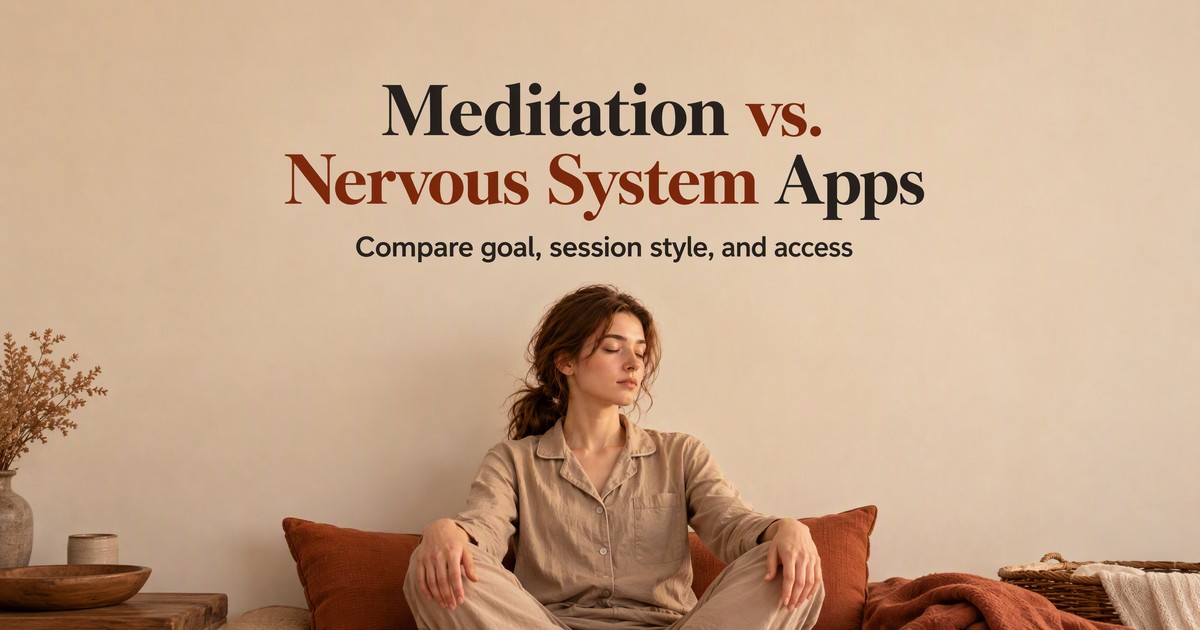
That makes the comparison less like three versions of the same app and more like two categories: content-library meditation apps versus a short state-matched regulation tool.

State matching vs choosing a session
The practical difference shows up on the hard days.

In Calm or Headspace, you might choose “sleep,” “stress,” “focus,” or a daily meditation. That is useful when you know what you want, enjoy guided content, or want a long-term mindfulness habit.
In NerveWindow, the app asks a small set of questions first. The point is to reduce the burden of choosing. If today feels restless, numb, pressured, or overloaded, the app routes you toward a practice designed for that reported pattern.
State-matched regulation is the design principle here: notice the state first, then choose the practice. It does not mean the app can diagnose you, read your body perfectly, or guarantee a result.
Session length and content
Calm has a wide content range: short breathing exercises, meditations, sleep stories, music, soundscapes, and other guided material.
Headspace also has a broad library, with meditation, mindfulness, sleep, focus, stress, and course-style material.
NerveWindow is narrower. The core loop is a short check-in plus a roughly seven-minute practice. Pro adds a daily training layer, but it is still not trying to be an endless library.
That tradeoff matters. More choice and bedtime content: Calm or Headspace. Less choice and a quicker state-based loop: NerveWindow.
Pricing
Calm and Headspace generally use subscription plans, and exact pricing can change by region, promotion, platform, and plan type.
NerveWindow is currently sold as a one-time $27 purchase for lifetime access, with NerveWindow Pro available as a separate one-time $67 upgrade.
Price should not be the whole decision. A subscription can be worth it if you use a large library often. A one-time tool can be more appealing if you mainly want one repeatable daily routine.
Research support
Calm and Headspace can point to mindfulness, meditation, sleep, and stress-related research. Headspace publishes a research page listing studies on app-based mindfulness and related outcomes. Calm’s own materials describe guided mindfulness and daily programs, and its editorial research pages discuss where meditation evidence is strong and where it is still mixed.
NerveWindow should be held to a more careful claim: the app itself has not been tested head-to-head against Calm or Headspace. It applies ideas from regulatory flexibility, interoception, breathing practice, HRV biofeedback, and state-aware self-regulation. Those components have research behind them, but that is not the same thing as a clinical trial proving NerveWindow is superior.
Safety note: This comparison is for self-guided wellness tools. If you are dealing with panic, trauma symptoms, depression, addiction risk, self-harm thoughts, or anything that feels unsafe, use qualified professional or crisis support rather than relying on an app.
When Calm or Headspace is the better pick
- You want meditation or mindfulness as an ongoing lifestyle practice.
- You like a large library and choosing by mood, topic, teacher, or length.
- You use sleep stories, sleep sounds, or bedtime content regularly.
- You enjoy longer guided sessions or multi-day courses.
- You want a familiar subscription product with regular new content.
In those contexts, Calm or Headspace may be exactly the right tool.
If sitting still with a guided session tends to leave you more restless or more shut down, read why meditation can feel harder when your nervous system is dysregulated.
When NerveWindow is the better pick
- You want a shorter routine and less choosing.
- You often notice different stress patterns on different days.
- You want the app to begin by asking what state you are in.
- You care more about a repeatable daily loop than a large content library.
- You prefer a one-time purchase over another subscription.
NerveWindow is especially relevant if the same meditation feels helpful one day and strangely unhelpful another day. That does not mean meditation is wrong; it may mean the starting state changed.
Can you use both?
Yes. A clean setup is to use NerveWindow for the daily state check-in and short practice, then use Calm or Headspace for longer meditations, bedtime audio, or topic-specific courses.

They do not need to compete in your actual life. The better app is the one that fits the moment you are trying to support.
Common questions
Is NerveWindow better than Calm or Headspace?
Only for a specific job: short state-matched practice. Calm and Headspace are stronger if you want broad meditation, sleep, or mindfulness libraries.
Are Calm and Headspace nervous system regulation apps?
They can support mindfulness, sleep, breathing, and stress habits. They are not primarily designed around a state check-in that routes you to different practices based on what you report that day.
Can these apps replace therapy or medical care?
No. They are self-guided support tools, not therapy, medical care, psychiatric care, or crisis care.
Short takeaway
Choose Calm or Headspace if you want a polished meditation and sleep library. Choose NerveWindow if you want a short state-matched routine with less choosing. Use both if you want the library and the daily check-in to serve different parts of your life.
NerveWindow — short state-matched regulation. $27 lifetime.