Alex Zah
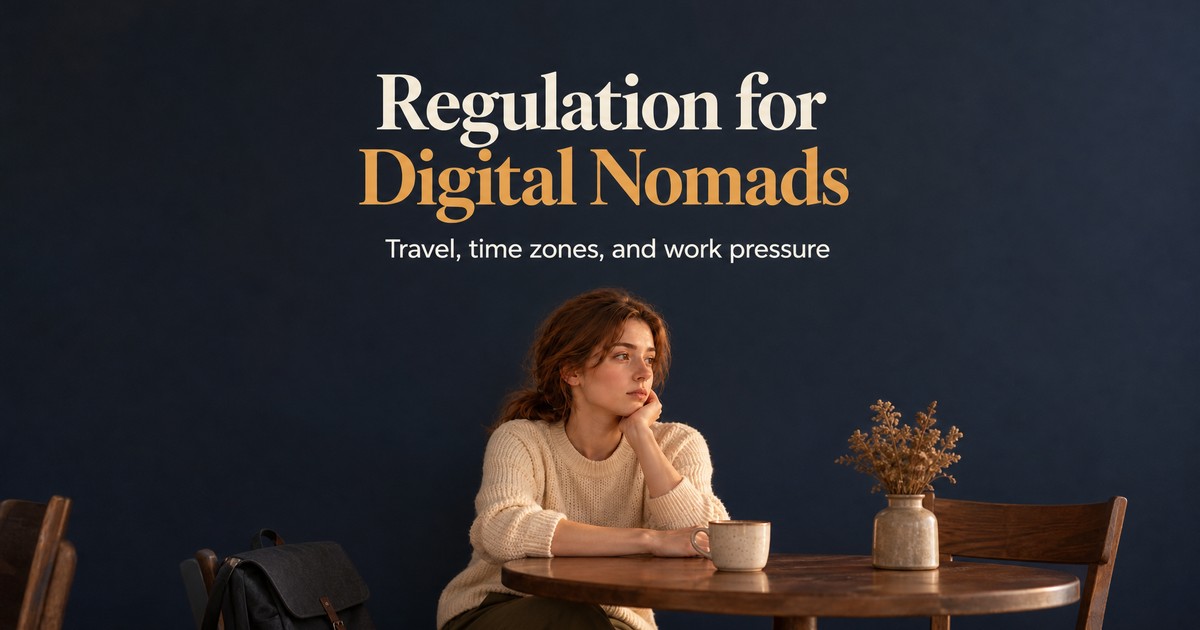
Digital nomad life can look flexible from the outside while being strangely hard on the nervous system: new rooms, new beds, new food, unstable routines, travel days, time-zone drift, and work that follows you everywhere.
The missing piece is often not another productivity app. It is a portable regulation system.
Why travel makes regulation harder
The body uses cues: light, sleep timing, meals, temperature, familiar rooms, social rhythm, and physical movement. Digital nomads change many of those cues at once while still expecting consistent output.
Jet lag and circadian disruption can affect sleep, fatigue, mood, digestion, and attention. Even without long flights, constant novelty can keep attention scanning.
Five portable anchors
Travel-day rules
Do not judge your whole life on a travel day. Use a lower-output plan: hydration, food, daylight, gentle movement, basic admin, and one essential work block if needed.
For big time-zone shifts, avoid treating generic internet sleep rules as medical guidance. Use reliable sleep guidance if circadian rhythm or insomnia issues are serious.
How NerveWindow fits
NerveWindow is useful for nomads because it is portable. The app does not require your perfect room, routine, or schedule. It helps you check your current state and pick a short reset wherever you are.
Safety note
This article is educational. It is not medical advice for jet lag, sleep disorders, anxiety, depression, or burnout. Use qualified support for persistent or severe symptoms.
FAQ
Why do I feel dysregulated when traveling?
Your cues change: sleep, light, food, rooms, social rhythm, and work boundaries. The body may need more anchoring than usual.
What is the smallest useful routine?
Morning light, water or food, a short walk, one work-start cue, and a work-stop cue.
Should I work the same schedule everywhere?
Not always. Use local light, realistic energy, and travel load. Consistency helps, but rigidity can backfire.
Can a regulation app help while traveling?
It can help if it gives short state-matched practices you can use in changing environments, without replacing real rest or support.
Short takeaway
Nomad regulation is about portable anchors. When place changes, repeat the cues your body can recognize.
NerveWindow gives you portable state checks for travel, work, and recovery. $27 lifetime.