 Alex Zah
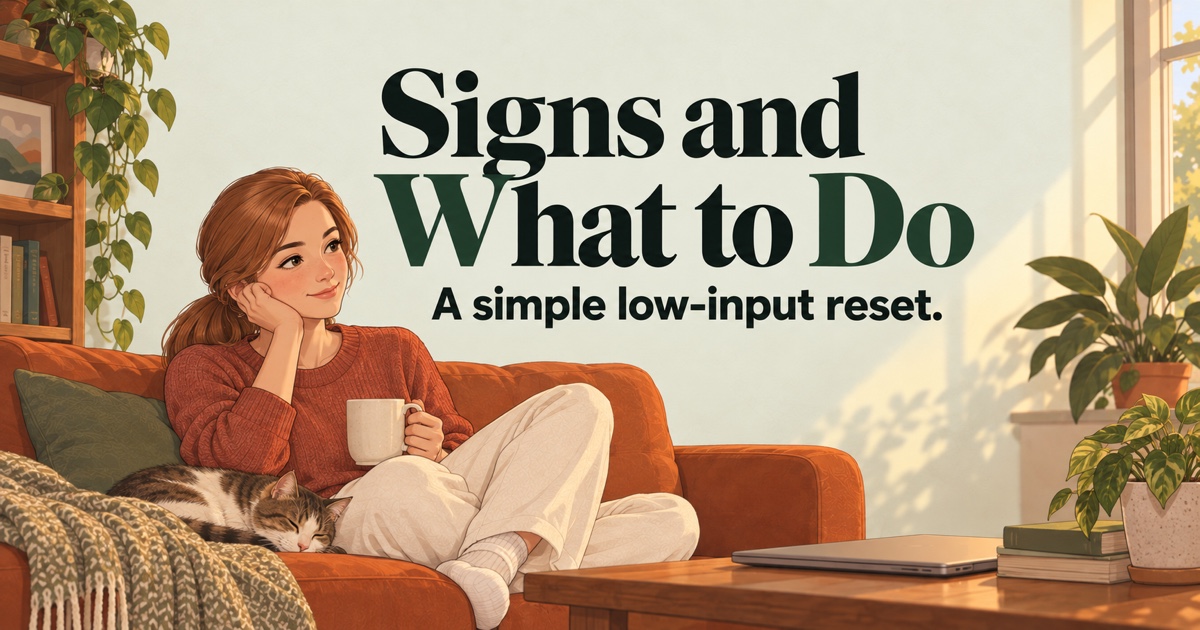
You can become overstimulated without being in a loud crowd. Ten open tabs, three conversations, notifications, bright light, uncertainty, and a tired body can create the same basic problem: more input is arriving than you can use well.
"Overstimulated" is a useful everyday description, not a diagnosis. Sensory overload is especially common in some neurodivergent people, but anyone can reach a point where noise, decisions, social demands, or emotional intensity exceed available capacity.
Signs you may be overstimulated


Overstimulation is not always anxiety
Anxiety can be part of the picture, but overstimulation can also feel angry, foggy, tearful, numb, or exhausted. That matters because the best response may be environmental: less light, less sound, fewer decisions, one conversation instead of five.
If your main problem is digital load, use the more specific digital overwhelm guide. If you are unsure whether you are activated or shut down, the state check-in can help you choose a starting point.
A low-input reset
- Stop adding. Put the phone face down, pause audio, leave the bright or crowded space if you can, and postpone non-urgent decisions for ten minutes.
- Choose one steady sense. Look at one unmoving object, feel the chair, or listen to one predictable sound. Do not force yourself to scan every sensation.
- Reduce body demand. Unclench your hands, support your back, loosen tight clothing, sip water, or lower the lights. Basic comfort is regulation support.
- Name one next boundary. "I need five quiet minutes." "I can answer one question." "I will return to this after lunch." Clear limits reduce incoming load.

Choose the next tool by state
If you feel wired and restless, slower movement or a slightly longer exhale may help. If you feel foggy or shut down, eyes-open orientation, a change of temperature, standing, or a short walk may fit better. If you feel angry, use space and safe muscular pressure before trying to explain yourself.

What not to do
Do not turn the reset into another performance test. You do not need a perfect breath count, a completely silent room, or a blank mind. Avoid driving or doing risky tasks if you feel disoriented. New, severe, or persistent symptoms should not automatically be blamed on "the nervous system."
How NerveWindow fits
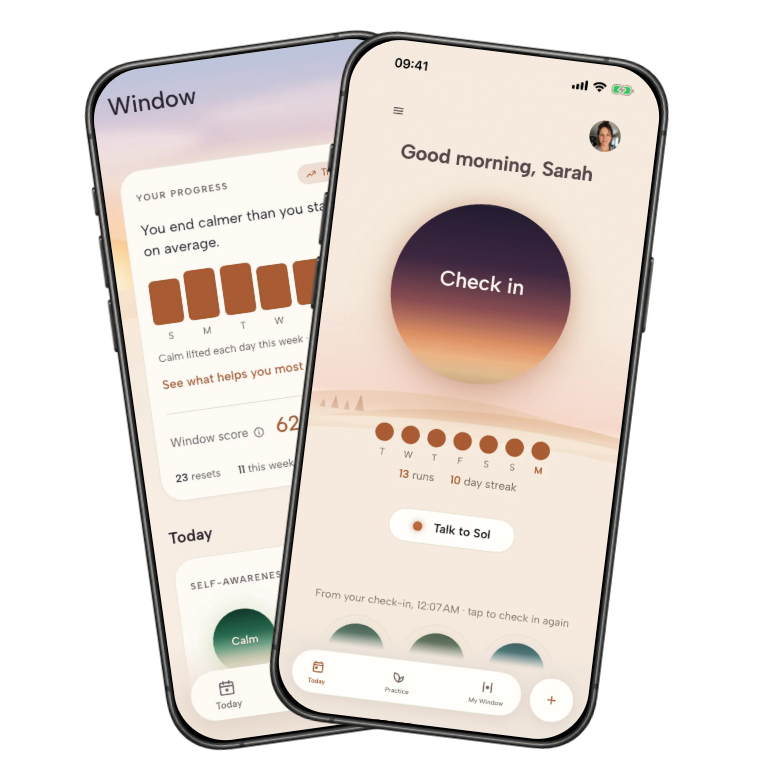
NerveWindow begins with the current pattern, then offers a short matched practice. That is useful when the problem is not a lack of tools but choosing among too many of them while already overloaded. For guided options, compare grounding apps by the support they offer or read our review of Rootd.
Safety note
Overstimulation can overlap with migraine, panic, medication effects, hearing or vision issues, autism, ADHD, and other conditions. This page cannot identify the cause. Seek qualified care for severe, new, frequent, or function-limiting symptoms.
Short takeaway
When input exceeds capacity, subtract first. Lower stimulation, find one steady anchor, support the body, and make one boundary before adding another exercise.
FAQ
What does an overstimulated nervous system feel like?
It may feel wired, irritable, restless, sensitive to sound or light, mentally crowded, foggy, tearful, or shut down. People can move between activation and exhaustion.
How do you calm an overstimulated nervous system?
Reduce incoming input first, then choose one steady sensory anchor, add basic physical support, and set one clear boundary. The best tool depends on whether you feel wired or shut down.
Is overstimulation the same as sensory overload?
The terms overlap, but overstimulation is often used more broadly for sensory, cognitive, social, digital, or emotional load. Sensory overload refers more specifically to difficulty processing sensory input.
Can too much screen time cause overstimulation?
Screens can add light, novelty, notifications, task switching, and emotional input. They may contribute to overload, especially when combined with fatigue or other demands, but they are not the only possible cause.
NerveWindow helps you choose a short exercise for the state you are in, instead of giving every moment the same technique.