Alex Zah
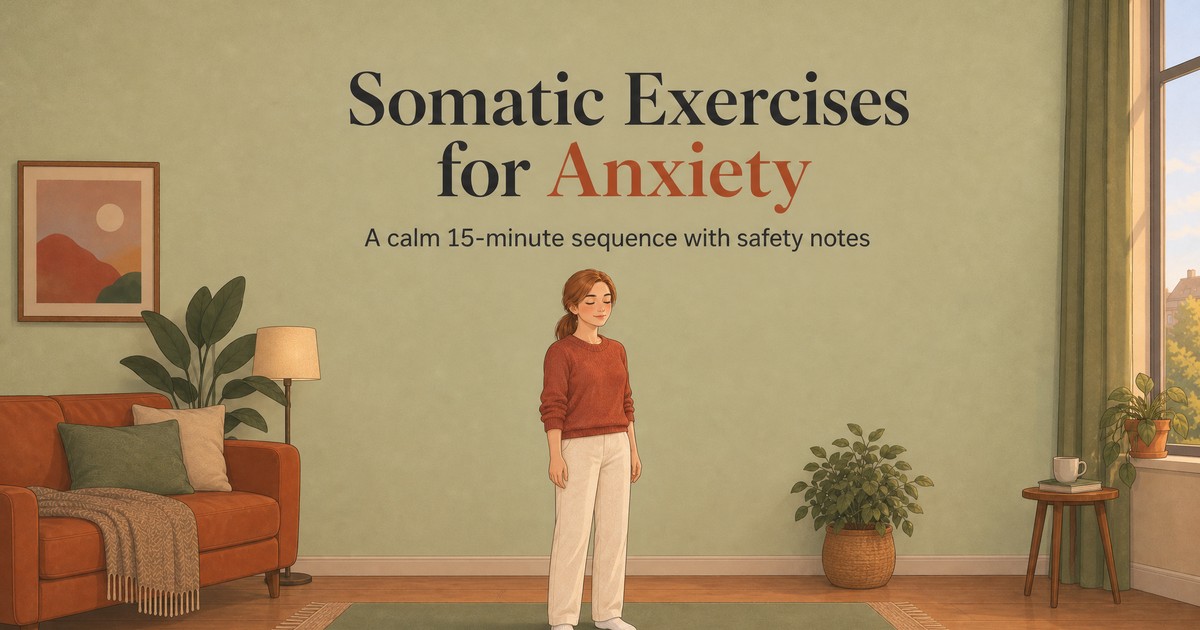
Somatic exercises for anxiety are not about making anxiety disappear on command. They are about giving your attention a body-based anchor so the state has a little more room to shift.
The 15-minute version should be simple, gentle, and easy to stop. If a practice makes symptoms louder, choose a lighter version or use support.
The 15-minute sequence
Why somatic does not mean intense
Body-based work can be useful because anxious states often include bodily sensations: breath changes, tension, heat, stomach churn, or restless movement. But more sensation is not always better.
For some people, intense breathwork, long inward focus, or aggressive shaking can feel destabilizing. Gentle orientation and light movement are often a better first step.
When the dominant signal is heat, pressure, or an urge to discharge, use the more specific somatic anger sequence.
How to match the exercise to the state
If you feel wired, use slow exhale, lower input, and steady contact with the floor. If you feel frozen or far away, try eyes-open orientation, warmth, simple movement, or naming objects before inward attention.
If you feel panicky, dizzy, medically unsure, or unsafe, stop the exercise and use appropriate support.
How NerveWindow fits
NerveWindow is built around the state-matching idea. It does not assume every anxious moment needs the same technique. It asks what the body and attention are doing, then gives you a short next practice. If you want guided practice, read about choosing between somatic exercise and regulation apps.
Safety note
This is not medical advice or anxiety care. Do not use body practices as a replacement for therapy, medication guidance, crisis support, or medical care when those are needed.
FAQ
Can somatic exercises stop anxiety fast?
They may reduce intensity for some people, but the effect is not automatic and they are not clinical care. Think of them as support for a moment of activation.
What if focusing on my body makes anxiety worse?
Use external orientation instead: look around, name objects, feel the chair, or move gently. You do not have to close your eyes.
Should I do this every day?
Only if it is useful and gentle. A few minutes practiced consistently can be better than a long routine you resist.
Can I use this before work or a meeting?
Yes, if the practice stays short and grounding. Choose a version that leaves you more present, not more self-monitoring.
Short takeaway
A somatic reset should be kind to the body. Orient, breathe gently, release tension, move slowly, and return to one small next action.
NerveWindow gives you short body-based routines matched to your state. $27 lifetime.