Alex Zah
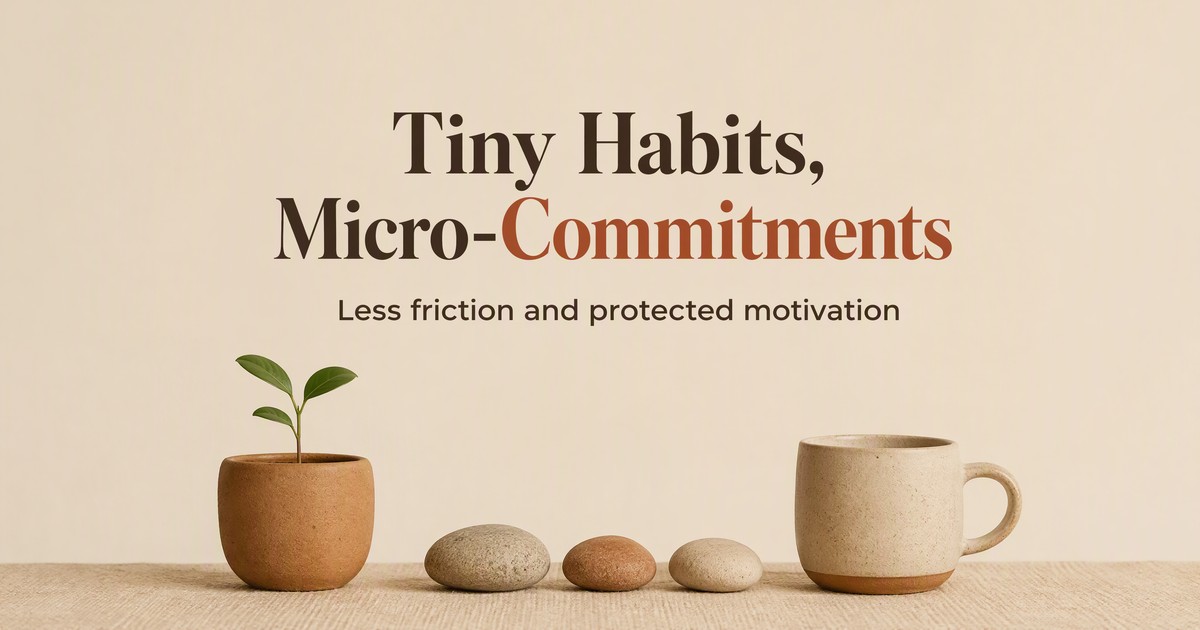
Tiny habits work because they respect the entry point. When a behavior is too big for the state you are in, the brain starts negotiating. When the behavior is tiny, you can enter before the negotiation gets loud.
What makes a habit tiny
A tiny habit is not a small dream. It is a small behavior. "Get healthy" is not tiny. "Put shoes by the door" is tiny. "Write a book" is not tiny. "Open the draft" is tiny.

Why micro-commitments help nervous-system state
Large commitments can feel threatening when you are overloaded. Micro-commitments lower the state cost. They create contact with the task without requiring a heroic identity shift.
This is especially useful for shutdown, avoidance, and wired procrastination. The first goal is entry, not performance.
How NerveWindow fits
NerveWindow uses a similar principle: choose the smallest state-matched routine that gets you back into contact with choice.
Safety note
This is educational behavior-change guidance. It is not medical advice, therapy, ADHD care, addiction care, or crisis support.
FAQ
What is an example of a tiny habit?
After I make coffee, I take one breath at the window. After I open my laptop, I write the title of the task.
Is tiny too small to matter?
The tiny action is the entry point. It matters because it builds consistency and reduces the friction around starting.
Should I always do more after the tiny action?
No. The tiny version is the official habit. Extra is optional, not required.
Why does this help when I am overwhelmed?
Overwhelm makes big actions expensive. Tiny actions lower the state cost and create a clear next step.
Short takeaway
Make the behavior small enough to enter, attach it to a real cue, and let consistency beat pressure.
NerveWindow turns state checks into tiny next moves. $27 lifetime.