 Alex Zah

An urge often feels like a command. Check the phone. Send the message. Eat the thing. Buy the thing. Escape the task. The body tightens around the idea that relief is only one action away.
Urge surfing changes the relationship to that moment. Instead of arguing with the urge or surrendering to it, you observe it as a changing wave: rising, peaking, shifting, and eventually losing force.
The simple urge wave

1
Name it
"This is an urge." Naming creates a small gap between sensation and action.
2
Locate it
Notice where the urge is strongest: throat, hands, jaw, chest, stomach, face, or attention.
3
Delay gently
Set a short timer. Watch the wave change before deciding the next move.

A three-minute self-guided version
- Minute 1: name the urge and rate intensity from 1 to 10. Do not debate whether you should have it.
- Minute 2: track body location. Is it heat, tightness, pressure, motion, heaviness, or restlessness?
- Minute 3: orient to the room. Let the eyes move. Keep breathing normally. At the end, choose the next smallest action.
Why fighting the urge can backfire
Fighting can make the urge feel like a threat. Obeying can make the urge feel like the only source of relief. Surfing is a third option: stay present long enough for the body to learn that intensity can change.

This does not mean every urge is harmless. It means that for small everyday urges, a short delay and body-aware observation can restore some choice.
Common mistakes

Trying to erase the urge
The goal is not instant calm. The goal is to stay with the wave long enough that the action is less automatic.
Starting too intense
Practice first with mild urges: checking, snacking, scrolling, interrupting, or avoiding a small task.
Using it without support
High-risk urges need more than a self-guided exercise. Use appropriate professional or crisis support.
Skipping the body
Urges are not only thoughts. Tracking sensation is what makes surfing different from arguing with yourself.
Safety note: this is not treatment for substance use, compulsive behavior, eating disorders, self-harm, or any unsafe impulse. Use qualified help if an urge feels risky, escalating, or hard to interrupt alone.
How NerveWindow fits
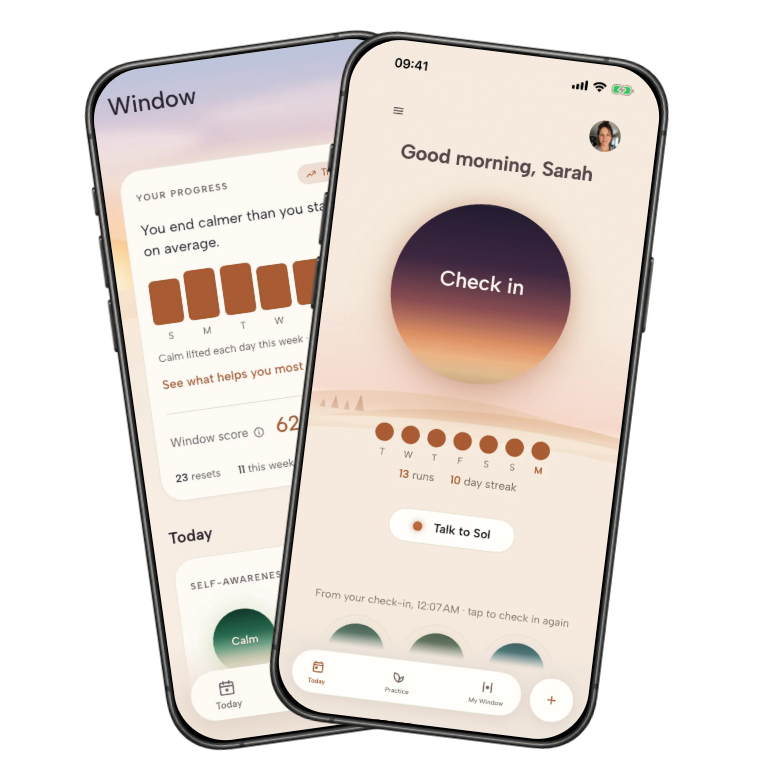
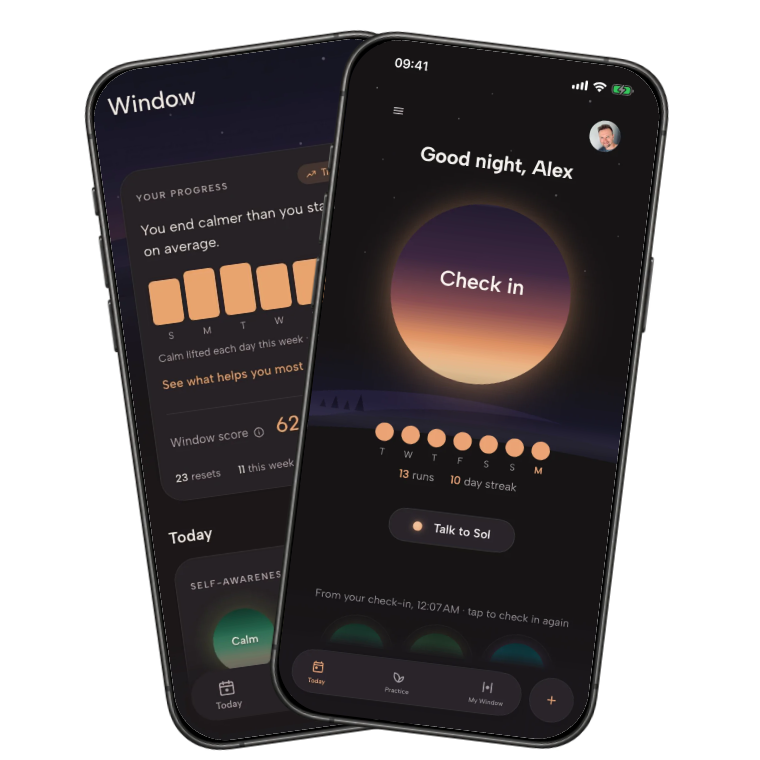
NerveWindow can help you choose whether the urge needs downshifting, orientation, a tiny task action, or a support boundary. The app is best for small self-guided moments, not for high-risk situations that need clinical care.
Related reading
FAQ
What is urge surfing?
It is a mindfulness-based practice of noticing an urge as a wave of sensation and attention, then delaying action while the intensity changes.
How long does an urge last?
It varies. The useful point is not a fixed number of seconds; it is that urges often change when you observe them without immediately acting.
Can I use urge surfing for cravings?
For mild everyday cravings, it may help create a pause. For substance-related, eating-disorder-related, self-harm-related, or unsafe urges, use qualified support.
What should I do after the wave passes?
Choose one small next action: drink water, move rooms, send a support message, return to a task, or remove the cue that triggered the urge.
NerveWindow helps you check your state and choose a short matched routine. $27 lifetime. 30-day refund.