You read that you can reset your vagus nerve in 30 seconds. You tried it. Your chest is still tight.
There is no button for that. But a slow breath out, a little longer than the breath in, is the easiest place to start. Try it now, for one minute.
Breathe with me for one minute
Breathe in for 4 seconds. Breathe out for 6.
Done. Notice your shoulders and your jaw. If you felt dizzy, stop and breathe the way you normally do.
If counting makes you tense, skip the numbers. Just let each breath out be a little longer.
In short
The most reasonable at-home practices are slow comfortable breathing, humming or singing, gentle movement, and safe social connection.
These may influence breathing, heart-rate patterns, attention, and arousal.
They do not literally reset the vagus nerve or guarantee instant calm.
The vagus nerve carries signals between the brain and organs including the heart, lungs, and digestive tract. That real anatomy has been turned into an online promise: press a point, hum once, splash cold water, and "reset" your nervous system.
A better frame is influence, not control. You can change conditions that affect autonomic activity. You cannot use a household exercise to inspect, repair, or medically stimulate a nerve on command.
Four low-risk practices to try
1. Slow, comfortable breathing
Let the breath become a little slower without taking oversized inhales. A simple starting pattern is four seconds in and six seconds out for one to three minutes. If counting creates strain, just let the exhale be slightly longer.
Slow breathing can change respiratory sinus arrhythmia and heart-rate variability in the moment. Those measures are related to cardiac vagal activity, but they are not a score of your worth or proof that a condition has been treated.
2. Humming or singing
Humming lengthens the exhale and creates vibration around the throat and face. That can make it an easy pacing tool. Evidence does not support treating one hum as a direct vagus-nerve reset, so use it because it is steady and comfortable, not because it promises a hidden switch. For a separate look at devices, compare Apollo Neuro wearables and Sensate sound and vibration.
3. Gentle rhythmic movement
Walk, sway, stretch, or move your shoulders at an easy pace. Movement can reduce bracing and give attention a predictable rhythm. If stillness makes you more agitated, movement may be a better entry point than breath focus.
4. Safe social contact
A calm voice, familiar face, shared walk, or quiet company can change how demanding a moment feels. This is not mystical synchronization. It is a reminder that regulation is shaped by context and relationship, not only isolated techniques.
What is the 7-minute vagus nerve reset?
It is a short routine people share online: a few calm practices in a row, about seven minutes in total. Nothing in it resets a nerve. It gives your body a few quiet minutes in a row, and that is often enough to feel a bit steadier.
Here is a gentle version you can do at your desk or on the couch:
Minutes 1 to 2: slow breathing, in for 4, out for 6.
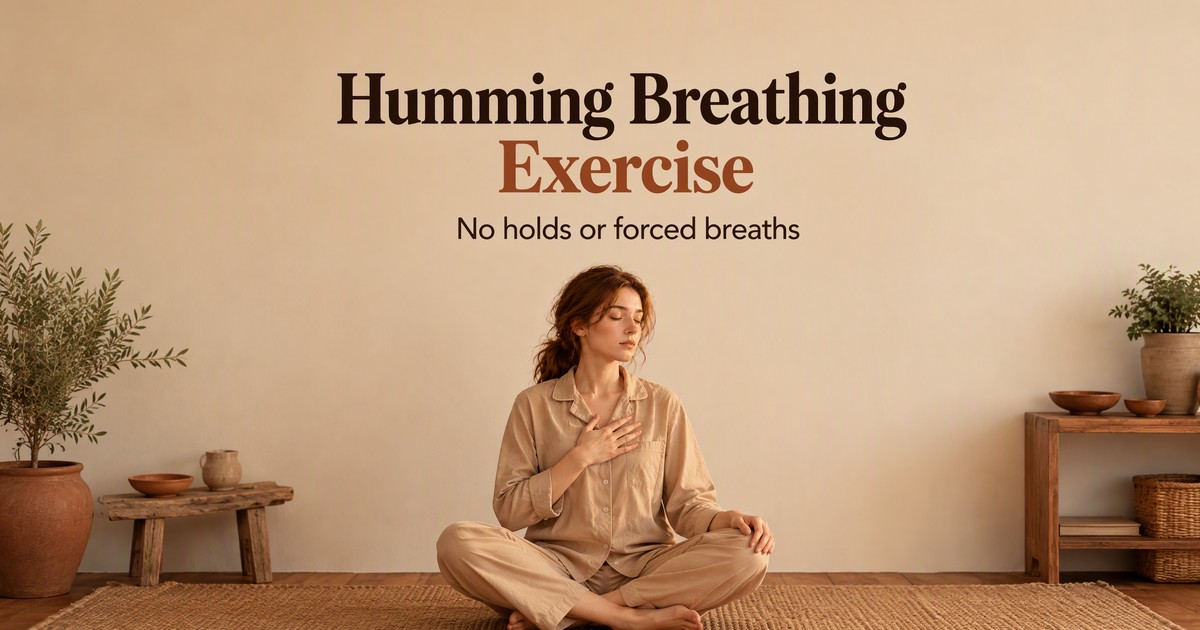
Minutes 3 to 4: hum a low note on each breath out.
Minutes 5 to 6: stand up, roll your shoulders, look slowly around the room.
Minute 7: sit still and notice what changed, even if it is small.
If breathing makes you more anxious, start with minutes 5 to 6 instead.
Cold exposure affects cardiovascular and respiratory responses, and it can be risky for some people. Online advice often jumps from the mammalian diving response to broad promises about anxiety or "vagal tone." NerveWindow does not recommend ice baths or face immersion as a universal regulation exercise.
What "vagal tone" does and does not mean
Researchers often use heart-rate variability measures as indirect markers related to autonomic flexibility. A consumer wearable cannot diagnose vagus-nerve health, and one higher reading does not mean you are emotionally regulated. Sleep, posture, breathing, measurement quality, medication, fitness, and illness can all affect the number. Our Welltory review looks at the limits of phone-based readings.
When breathing is the wrong first tool
If breath focus makes you dizzy, panicky, air-hungry, or more self-conscious, stop. Use eyes-open orientation, contact with the floor, or gentle walking instead. The seven-minute reset guide explains how to choose a starting practice for the state you notice.
How NerveWindow fits
NerveWindow includes breathing where it fits, but it does not make breathwork the answer to every pattern. A restless state, a shut-down state, and an overloaded state may need different starting points.
Medical boundary
Vagus nerve stimulation is also the name of a medical treatment delivered with regulated devices for specific conditions. That is not the same as humming, breathing, or massage. Seek medical care for fainting, chest pain, breathing difficulty, new neurological symptoms, or concerns about heart rhythm.
Short takeaway
Skip the magic-reset claim. Use slow breathing, sound, movement, and connection as gentle ways to influence the whole system, then keep only what leaves you more present and capable.
FAQ
Can you reset your vagus nerve?
Not like a switch. Everyday practices may influence autonomic activity, breathing, attention, and arousal, but they do not literally reboot or repair the vagus nerve.
What is the easiest vagus nerve exercise?
Try one to three minutes of comfortable slow breathing with a slightly longer exhale. Stop if it causes dizziness, air hunger, panic, or discomfort.
Does humming stimulate the vagus nerve?
Humming changes the exhale and creates vibration around the throat. It may feel settling, but evidence does not justify promising that humming directly resets the vagus nerve.
Is medical vagus nerve stimulation the same thing?
No. Medical vagus nerve stimulation uses regulated implanted or external devices for specific clinical purposes. Household breathing, humming, and movement practices are not equivalent treatments.
NerveWindow helps you choose a short exercise for the state you are in, instead of giving every moment the same technique.
Regulate your nervous system using the Window of Tolerance method.Tell NerveWindow how you feel right now, or talk it through with Sol. The app picks the practice that fits this moment, and over the weeks it shows you what helps you most.See how NerveWindow works →
Gestalt therapist in training · Certified Executive Coach · Founder of NerveWindow
After ten years building businesses across 20 countries, Alex spent the next decade learning how to support people when pushing harder was no longer helping. NerveWindow brings that work into a practice you can use in everyday life.
Training & Qualifications
GestaltGestalt Institute of Scandinavia (GIS), Denmark4-year Gestalt training, now in the supervised practice years. Accredited by EAGT, EAP and DPFO.
 Alex Zah