 Alex Zah

Wired and tired is the strange state where you cannot fully rest and cannot properly work. The body feels activated, but the tank feels empty.
This pattern is common after long periods of pressure, screen exposure, unresolved tasks, conflict, poor sleep, or repeated switching between demands.
How it shows up

Why more pushing often backfires
When activation is already high, more pressure can narrow attention and increase threat scanning. You may get a burst of effort, but it often costs more recovery later.
The goal is not to become perfectly calm before doing anything. The goal is to lower the activation enough that one small useful action becomes possible.
What helps first
Start by reducing input: dim the screen, close extra tabs, lower sound, put the phone away, or move to a simpler environment.
Then choose a small state-matched step. If the body is buzzing, try slow walking, light shaking, or a few longer exhales. If the mind is looping, write down the loop and the next time you will look at it. If you are depleted, food, water, warmth, and sleep hygiene may matter more than another technique.
For evenings when the body stays tense after the screen is off, follow the gentle somatic routine for sleep.
What to avoid
Avoid treating wired-and-tired as laziness. Also avoid using productivity hacks to squeeze more output from a depleted system. The useful intervention is often recovery plus a smaller task, not a harsher plan.
Safety note
If sleeplessness, panic, exhaustion, mood swings, or medical symptoms are severe or persistent, get professional support. This article is not medical advice.
FAQ
Why am I tired but cannot relax?
Your system may be depleted but still activated. That can happen when stress momentum, unresolved tasks, or stimulation keep the body in a mobilized pattern.
Is wired and tired the same as burnout?
It can be part of burnout, but it can also happen after a short intense period. Burnout is broader and deserves attention to workload, recovery, and support.
What is the fastest thing to try?
Reduce input first. Then use one small state-matched practice: longer exhales, slow walking, sensory orientation, or writing down the loop.
Should I force myself to meditate?
Not necessarily. If inward attention makes the state louder, start eyes-open with orientation or gentle movement.
Short takeaway
Wired-and-tired is not a motivation problem. It is a mixed state: activation is high and usable capacity is low. Lower input, support the body, and make the next task smaller.
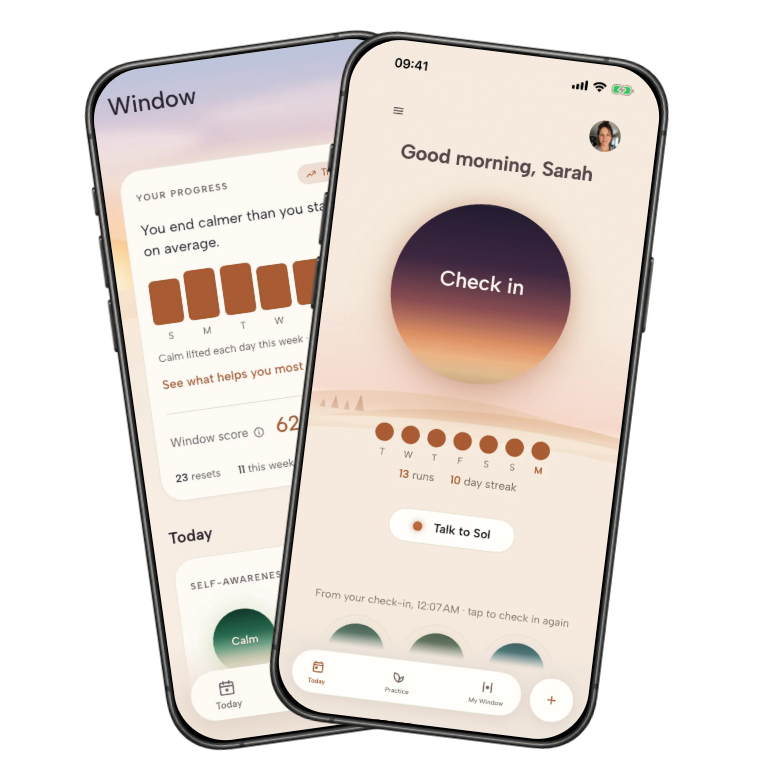
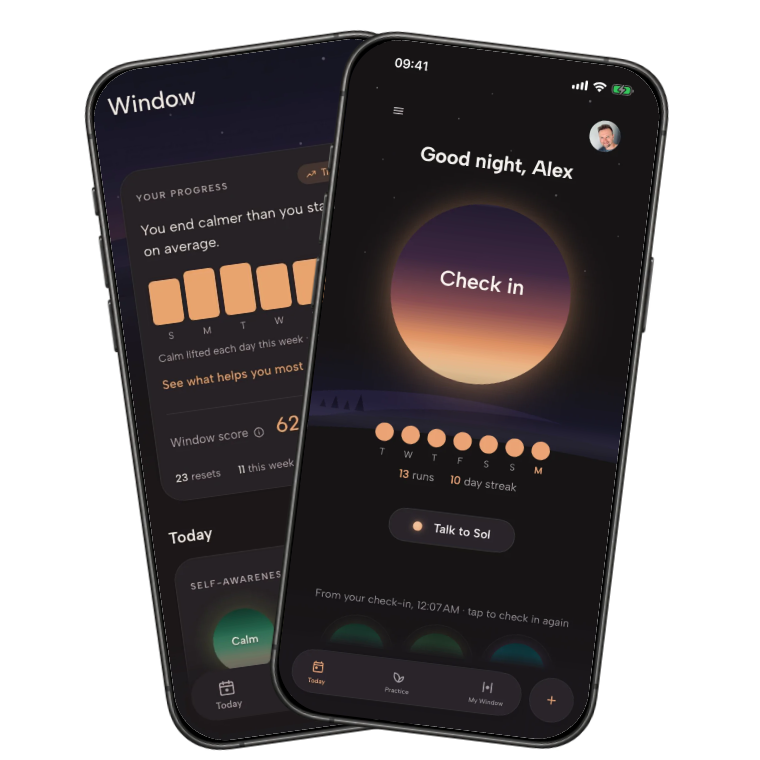
NerveWindow gives wired-and-tired states a matched routine instead of another productivity lecture. $27 lifetime.